


A guest post by Ashkan Hashemipour, a PhD candidate at the University of Oxford. His research focuses on Iranian history and politics, particularly the Iranian Revolution’s international dimension.
***
As Team Melli prepared for the World Cup, it found itself increasingly caught up in the political turmoil engulfing Iran. Earlier in the year, on January 8th and 9th, Iranians had engaged in unprecedented protests against the state. They were repressed by the government, which characterized them as foreign-backed. Meanwhile, the head of the Football Federation of Iran (FFI) was closely linked to the state, and the team’s captain – a political opponent of the regime – was excluded from the World Cup squad. To top it off, the tournament was being hosted in a country that had spent the previous two years violating international law and was attempting to use football to soften its image.
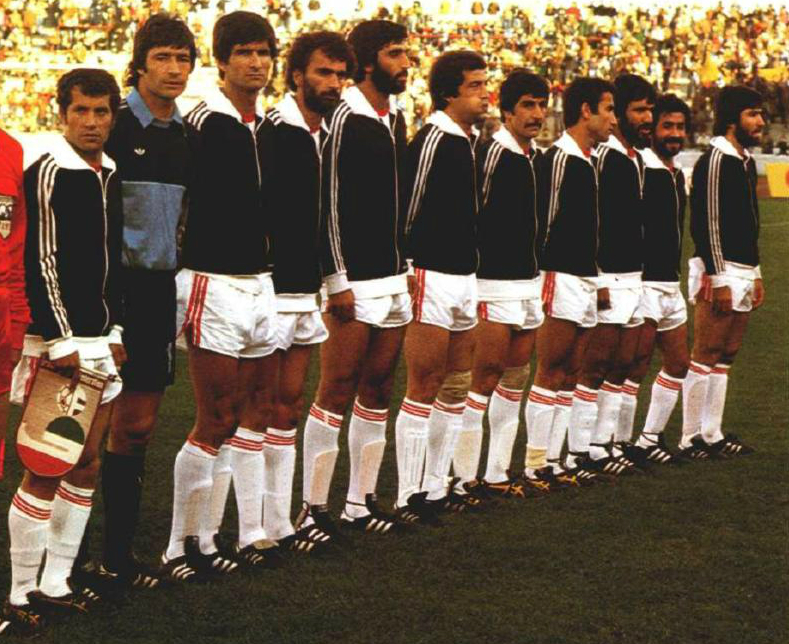
The year was 1978. The Shah was in power, protests were gaining traction across the country, and Team Melli was headed to Argentina to represent Iran on the world stage for the first time in history. There were isolated allegations of threats against players, and some opposition figures accused the Shah of using football to distract from politics. Yet despite the team’s institutional links to the state and the burgeoning revolutionary movement that would eventually topple the Pahlavi regime, the team never became the target of a broader campaign.
Twenty years later, at the 1998 World Cup in France, Iran faced the United States in what has been described as the most “politically charged” match in World Cup history.
The crowd featured thousands of Iranian spectators with t-shirts bearing the face of the leader of the Mojahedin-e Khalq (MEK), a marginal but highly organized opposition group with many supporters in Europe. Having fought alongside Iraqi forces during the Iran-Iraq War, the MEK was reviled by both the Iranian state and people and might have been expected to oppose Team Melli.
But when the match began, Iranian spectators universally cheered. Iran ended up winning 2-1, and videos from after the match show groups of Iranians with a variety of symbols celebrating the victory.
Similar sentiment guided Iran’s supporters in the World Cups in 2006, 2014, and 2018: across the political spectrum, Team Melli commanded universal support and respect. Yet during the past two tournaments, the team has faced a sustained campaign of delegitimization. Its players have been depicted on social media as being “lackeys” of the Islamic Republic; Persian language diaspora satellite channels and Israeli social media accounts have promoted the narrative that they are the “Regime’s Team”; and outside stadiums, protestors seeking a return to Iran’s pre-revolutionary monarchy have assaulted matchgoers wearing their jerseys or carrying Iranian flags.
This article traces how this campaign against Team Melli came to be, from its foreign-backed origins to its diffusion within segments of Iranian society. I explore how this campaign continued into the lead-up to the 2026 tournament and show how it manifested on the ground, drawing on my experience attending the matches.
Qatar 2022 and the Politicization of Team Melli
At the 2018 World Cup, Team Melli was backed by Iranians of many political stripes, including supporters of the government, opponents, and those who are somewhere in between. Upon the team’s qualification, Reza Pahlavi, son of the deposed Shah who only four years later would lend his voice to the campaign targeting the team, congratulated its players, stating: “Bravo to the heroes of Iran’s national team. I warmly congratulate each and every one of you, as well as my fellow Iranians, on qualifying for the 2018 FIFA World Cup.”
Support for the team was so universal that the government of Israel itself even sent its well wishes on its Persian language X account.
Cheered on by all segments of Iranian society (and some outside of it), the team had a great tournament: it secured its first win since 1998 against Morocco and a draw against Cristiano Ronaldo’s Portugal. It was not enough to qualify for the knock-out stage, but the tournament left Iranians around the world with a few lifelong memories: Alireza Beiranvand’s save of Ronaldo’s penalty, Saeid Ezatolahi’s (disallowed) goal versus Spain, and Aziz Bouhaddouz’s stoppage time own-goal off of Ehsan Hajisafi’s free kick.
The 2022 World Cup was different. Iran’s political climate had been changing, and the US was spearheading an effort to exclude Iran from global politics. In 2018, Donald Trump withdrew from the US-Iran nuclear deal and implemented a campaign of economic “maximum pressure” against the Iranian population. In 2020, he brought the country to the brink of war by assassinating Iranian General Qassem Soleimani. Days later, amid this turmoil, Iran’s Revolutionary Guards shot down a passenger airliner, killing hundreds and fueling protests and anti-government sentiment. In September 2022, the Woman, Life, Freedom Movement began after Mahsa Jina Amini was beaten by and died in the custody of Iran’s Morality Police. Hundreds of thousands protested, and security forces killed over five hundred demonstrators.
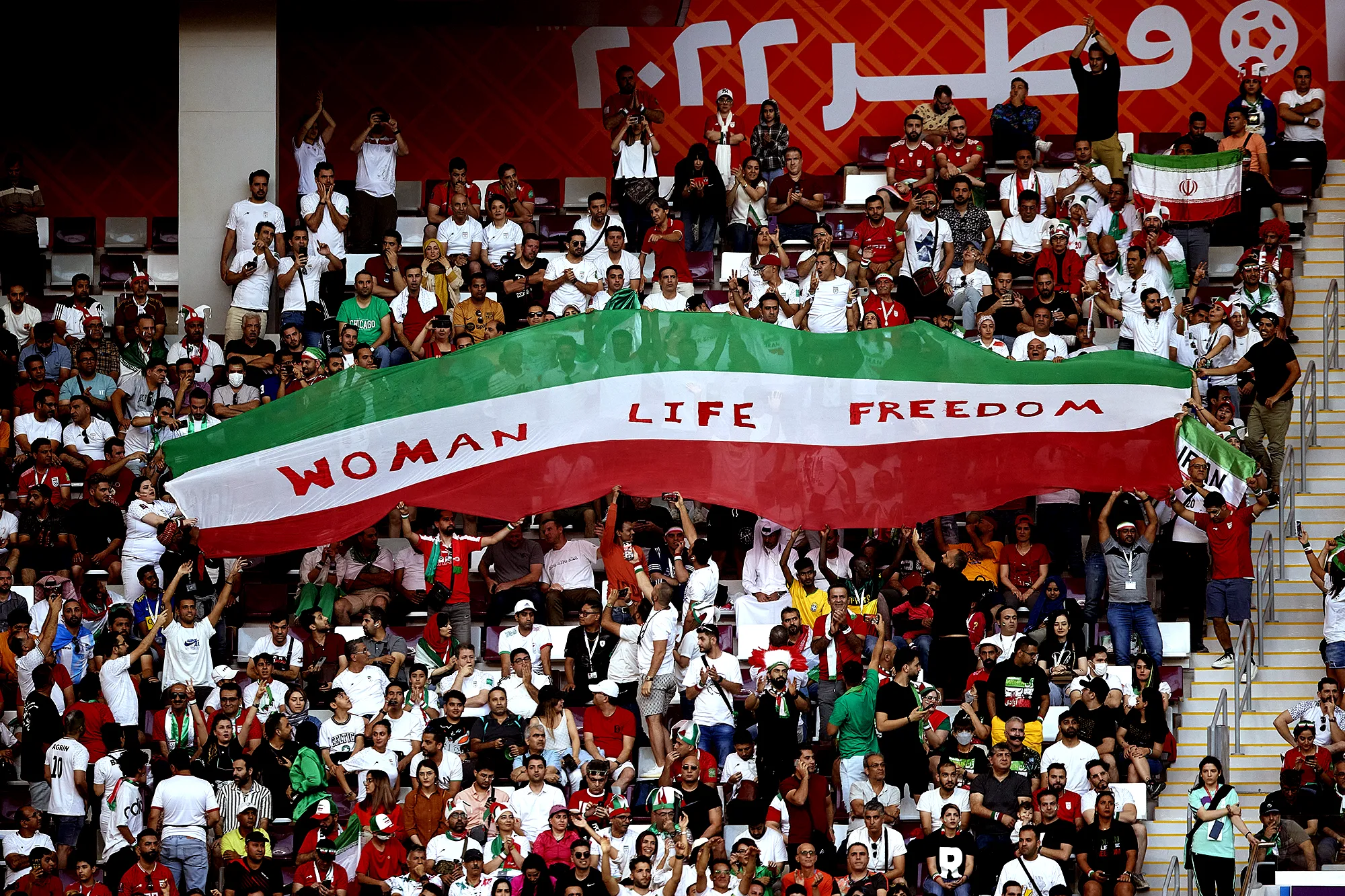
Opposition figures abroad capitalized on these conditions to increase Iranians’ international isolation. In mid-2022, Masih Alinejad, who works for the US-funded outlet Voice of America, founded United For Navid, an organization largely dedicated to calling on FIFA to suspend Iran from the World Cup. The group included former Iranian national team captains Ali Karimi and Mehdi Mahdavikia. They hired Spanish law firm Ruiz-Huerta & Crespo to submit a formal request to FIFA to ban Iran. The case centered on the exclusion of women from stadiums and violation of Articles 4 and 19 of FIFA’s statutes, which, respectively, prohibit gender discrimination and require member associations to manage their affairs independent of third party (i.e., government) influence. This was a continuation of a campaign that had begun when Alinejad led calls to ban the team following the exclusion of female ticketholders from a World Cup qualifier in Mashhad in March 2022, which contradicted guarantees Iran had given that women could enter.
This campaign was noticeably different from earlier grassroots campaigns inside of Iran like “Open Stadiums,” which sought to pressure FIFA and the FFI but did not call for Team Melli’s suspension. These campaigns had gained momentum after the death of Sahar Khodayari, who was arrested after disguising herself as a man to attend a match in 2019. Their efforts helped secure the admission of women to matches later in 2019, although authorities applied the policy inconsistently.
Pushing to ban the team from the tournament was paradoxical considering that Team Melli’s players themselves advocated against these policies. Many on the 2022 squad, including Alireza Jahanbakhsh, Ehsan Hajsafi, Karim Ansarifard, Morteza Pouraliganji, and Sardar Azmoun, condemned the ban on female spectators. Jahanbakhsh, the captain during qualifiers, sharply criticized officials: “The fact that we are discussing the right of women to enter stadiums in 2022 is laughable and painful.”
Beside formal efforts to ban the team, Israel’s Persian-language X account referred to Team Melli as the “Islamic Republic’s team.” Iran International, a TV channel backed by investors linked to Saudi Arabia and whose journalists would later pose with Israel’s intelligence minister, published an editorial claiming that many Iranians view the team as a “propaganda tool,” and influential voices, like Iranian rapper Hichkas, attacked the players.
Concurrently, anti-Team Melli sentiment grew in the broader public. A study that coded a random sample of 20,000 Persian-language tweets found that thousands of ordinary users attacked the national team. Although much of this content likely originated in state-backed platform manipulation, which Israel has been known to engage in, it was subsequently spread by ordinary users.
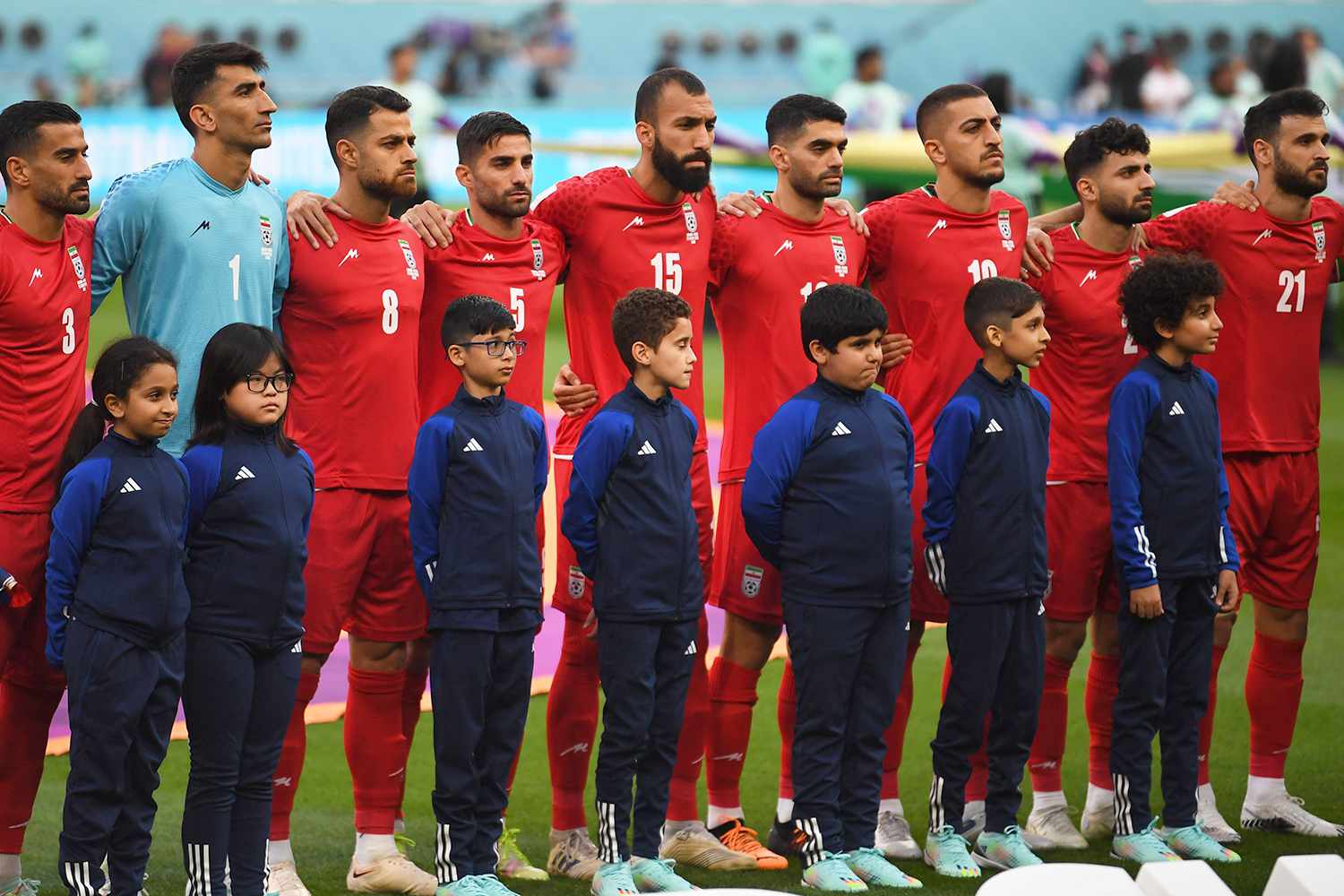
What was striking was that these campaigns targeted team members who had spoken against their government’s actions at great risk to their own safety. World Cup captain Ehsan Hajsafi decried repression of protests and declared his support for the families of slain protestors. Iran’s most popular club teams, Persepolis and Esteghlal, which together supplied seven of the country’s 25-man World Cup squad, both registered their protest in the lead-up to the World Cup. And once the Cup began, players refused to sing the national anthem in the tournament’s first game in a sign of protest not unlike taking the knee during the US national anthem protests.
But it didn’t matter. The false perception that the team was aligned with authorities had already taken hold. At times, spectators booed the players and chanted “bi-sharaf” (“without honor”). Upon Iran’s defeat by the US in the third group stage match, some Iranians danced and celebrated in the streets. They did not represent all Iranians, many of whom supported the team. But the fact that a visible number of Iranians were openly opposing Team Melli marked a shocking change from previous tournaments.
The partial success of this campaign in 2022 has disturbing implications. By insisting that even players who openly criticized the government had not done “enough,” Team Melli’s opponents demonstrated that they would not accept any action short of these players’ giving up their livelihoods by refusing to play or permanently severing their ties with their families in Iran by defecting. By virtue of being Iranian footballers on an international stage, the players were assigned a political responsibility of placing themselves at the forefront of opposition to an authoritarian state. Such opposition would have without a doubt ended their international careers, and the fact that this campaign was led by figures outside of the country, who do not face similar consequences for their actions, makes it all the more morally questionable. Given that the players had already registered their protest against state repression, it’s unclear what the campaign to delegitimize them actually wanted, short of demanding they disappear altogether.
United States, 2026
The 2026 World Cup was, in many ways, similar to 2022. It was preceded by a mass polarization of Iranians, both due to protests in January and the Israeli-American Wars. But in other ways, 2026 was very different.
Iran’s team was the subject of intense discrimination by the United States, which hosted the Cup: Team Melli’s players were only allowed to remain in the US for 24-48 hours before the matches, forced to immediately leave the US after playing, and, were required to relocate their training camp to Tijuana even though all their games were in the US. The players’ visas did not come through until days before the tournament, and many members of the team’s staff were denied visas. Once players made it to the US, they were harassed by the media and, unlike players on other teams, were asked explicitly political questions, ranging from US-Iran relations to their thoughts on gay pride.
Iran also became the first team in World Cup history to play matches in a host country while that host was actively bombing it. The domestic league, the primary source of national team players, had been suspended since the beginning of the war in February, disrupting players’ preparation.
Like in 2022, there were social media campaigns to delegitimize the team. But, this time, they appeared more openly coordinated. Reza Pahlavi, who between the two tournaments had met with Israeli Prime Minister Benjamin Netanyahu and was subsequently bolstered by an Israeli influence operation, parroted Israeli claims that the players did not represent Iran’s “real team.” Other prominent monarchist activists were more explicit, saying the team represents a “bloodthirsty regime.” A search of hashtags such as “Team Mullah,” reveals thousands of tweets from monarchist accounts on match days. There were also reports of attempts to manufacture hostility: Iranian influencers were allegedly offered $1,000 to publish posts attacking the team. Iran International amplified negative coverage and worked to prevent FFI President Mehdi Taj from entering the host countries.
Amid the campaign against them, I went to Iran’s opening match in Los Angeles on June 15th expecting Team Melli to encounter more hostility than support. I had seen videos from earlier in the day, when around a dozen monarchist protestors gathered outside of the team’s hotel and chanted “shame on you” at the players.
On the drive to the stadium, I saw a handful of people gathered in a small protest. Videos of agitators physically and verbally harassing people for wearing Team Melli shirts were already making the rounds on Instagram, and I felt uneasy in my jersey. Nonetheless, we parked and went into the stadium without any problems. As kick-off approached, the official national anthem – adopted in 1990 and not recognized by many Iranians, who prefer the historical Ey Iran – was resoundingly booed.
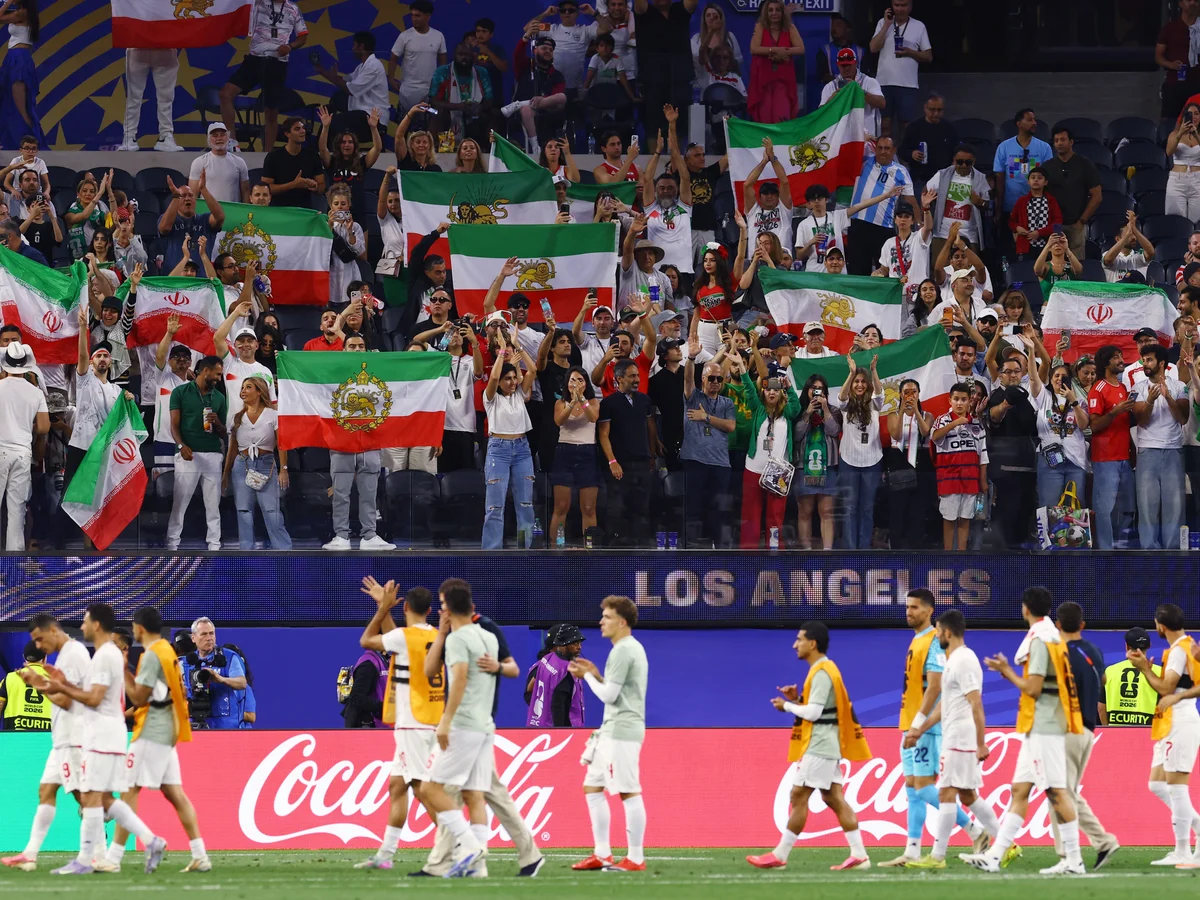
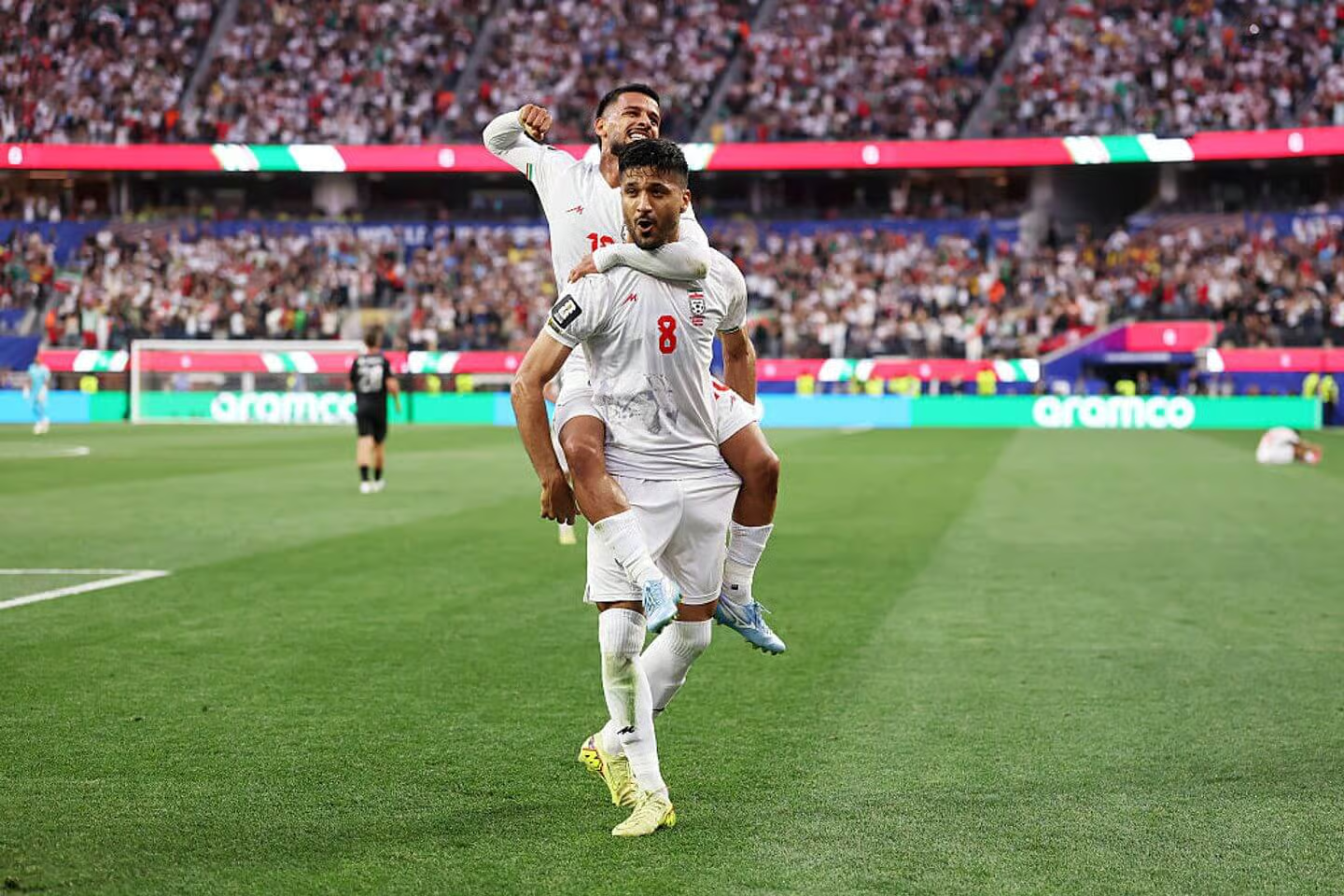
Once the match began, the atmosphere changed. Iranians throughout the stadium rallied behind the team. Chants of “Iran, Iran” started whenever Iran received possession, and the stadium exploded with Ramin Rezaeian and Mohammad Mohebbi’s goals. I was pleasantly surprised that the US-based Iranian diaspora – caricatured as politically extreme and more willing to reject a team coming from Iran – offered the team far more enthusiastic support than the spectators in Qatar, many of whom had traveled directly from Iran.
At both matches in LA, I saw supporters carrying various versions of the Iranian flag: the Lion and Sun, the Islamic Republic’s flag, the Woman, Life, Freedom flag, or plain red-white-and-green tricolors. Supporters wore t-shirts drawing attention to those killed during the January protests, the schoolchildren killed in the US strike on an elementary school in Minab, or footballers inside of Iran who had been arrested. Many wore Team Melli jerseys, with some covering the emblem of the Islamic Republic. But regardless of their political attitudes, Iranian spectators celebrated the team and were mostly civil and friendly.
Of course, not everyone supported the team. Videos taken outside the stadium after the match also showed ordinary supporters being assaulted. In one disturbing incident, a monarchist carrying a Lion and Sun flag confronted an ordinary fan wearing a t-shirt with the word “Iran,” accused him of supporting the Islamic Republic, and demanded that he take the flag and chant “Javid Shah” (“Long live the Shah”). When the fan, who had been born in Germany, said that he did not know what the phrase meant, the protestor responded with homophobic obscenities and insults.
But on the ground in Los Angeles, I saw no more than a few dozen protestors. After Iran’s second match versus Belgium, I even went to Westwood Boulevard – the center of the city’s Iranian community. Many of the people I saw were wearing Team Melli jerseys and celebrating the hard-earned draw against Belgium. Protestors and agitators were nowhere to be seen.
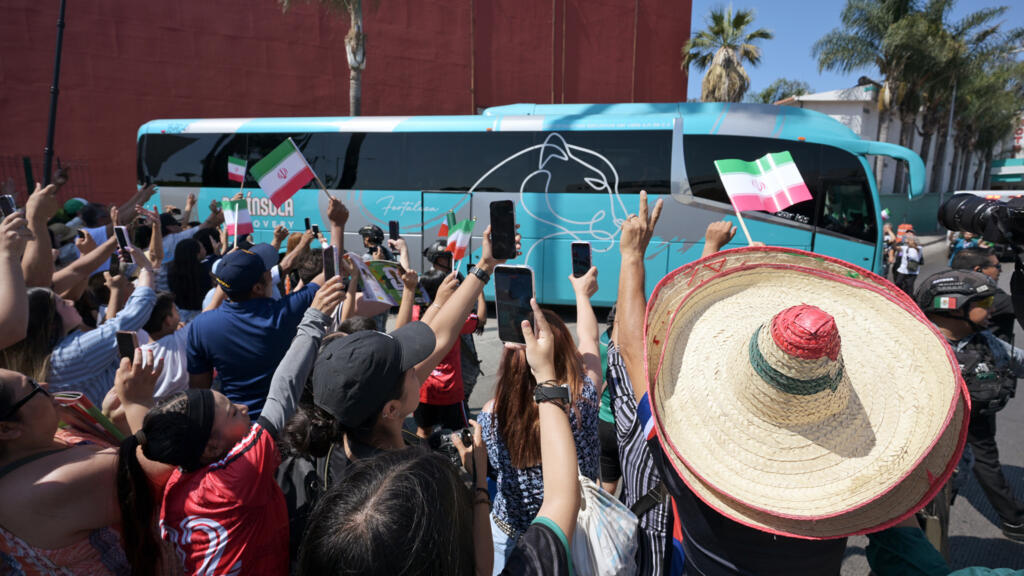
Iranian players made it clear in their postgame interviews that they had the same impression. They stated that they felt and appreciated this deep, perhaps unexpected, outpouring of support during the LA matches. Mohammad Mohebbi, who had been targeted by social media posts from Israel’s official X account that falsely sought to portray him as a supporter of the government, even directly thanked LA-based Iranians for creating a positive atmosphere for the team. Beyond the support in the stadium, LA-based Iranians travelled to visit the team at their hotel in Tijuana, and Iranian artist Yalda Sepahpour made and gifted t-shirts celebrating the team to the players. In Tijuana, Mexican fans of Team Melli gathered daily outside the hotel to cheer on the team and get their autographs.


At the third match, which was in Seattle, I got more of a taste of what the anti-team protests looked like. The afternoon of the Iran-Egypt match on June 26th, I went to Team Melli’s hotel with the hope of catching a glimpse of the players. Evidently, I was not the only person with this idea, as over one hundred Iranians had packed the lobby and restaurant. After seeing some of the players, a few of us left the hotel and were accosted by a group of four monarchist protestors filming us. We were all a bit confused and ended up just walking away. Later on social media, I came across a video on social media showing one of the same men harassing other Team Melli supporters. By then, it was clear to me that those instigating these encounters amounted to just a handful of people relying on social media to seem greater in number.
As we walked to the stadium for the match, I saw a small group of protesters outside – perhaps thirty people carrying Lion and Sun and Israeli flags. Inside the stadium, the atmosphere resembled the Los Angeles matches: supporters carried Iran’s different flags but were united in their support for the team. The mood was jovial and friendly, and after the match, many of us stayed, chanting players’ names as they were interviewed by journalists. After the on-pitch interviews ended, we remained in our seats, which were close to the players’ entrance, hoping they would come out one final time.
But we were told that they wouldn’t. They weren’t allowed to stay the night in the US and had to leave the stadium immediately to fly back to Mexico.
A Source of Unity
The campaign against Team Melli seemed ubiquitous on social media and satellite Iranian channels. But the outpour of support for the team on the ground shows just how manipulated and unrepresentative these platforms can be and how they do not constitute an expression of popular sentiment. The persistence of the labels of “Team Mullah” or the “Islamic Republic’s Team” is confined to a small but vocal minority, concentrated largely in the monarchist movement. Despite their best efforts, however, they failed to prevent the Iranian team from feeling welcomed by their supporters.
Team Melli continued to be what it has always been: a source of collective identification and unity for Iranians all over the world.
The players themselves left the tournament with their heads held high, despite facing unprecedented discrimination from the host country. After their matches in Los Angeles and Seattle, they left notes thanking their supporters:
We came to Los Angeles with pride, competed with honor, and leave with dignity… Thank you, Los Angeles, for your hospitality. And thank you to every Iranian who gave their heart, voice, and soul for Iran throughout these 180 minutes… May peace, respect, and friendship prevail among all nations.
Ramin Rezaeian, the team’s star in the tournament, captured the team’s feelings in a particularly moving interview following Iran’s heartbreaking final match against Egypt:
We just wanted to make people happy… Our people deserve the best in this world, we just wanted to bring a tiny bit of joy into their hearts.
Discover more from Ajam Media Collective
Subscribe to get the latest posts sent to your email.


