


This post is part of Tarjomeh, a series of original poetry translations from Persian to English. Organized by editor Ashkaan Kashani, Tarjomeh poses the following questions: “When and where does Persian poetry become modern? How does modernity emerge within a millennium-old poetic tradition?” By asking readers and contributors to approach this question through the act of translation itself, Tarjomeh sets out to explore translation and poetry as one and the same creative process – discursive practices defined by their fissures, gaps, silences, and remainders.
Translated and introduced by Ashkaan Kashani and Behzad Borhan. Ashkaan Kashani is a PhD student in the Department of Comparative Literature at the University of California, Los Angeles, and an editor at Ajam Media Collective. Behzad Borhan is a Course Lecturer of Persian Language at McGill University’s Institute of Islamic Studies.
***
The Iranian poet Mehdi Akhavan-Sales (1929-1990) first published Chavushi in his 1956 collection Zemestan (Winter). Zemestan received widespread acclaim and firmly established Akhavan’s status as one of Iran’s leading modernist poets, enduring to this day as a masterwork of Persian literature. Nevertheless, it remains inseparable from the dark and chilling season of Iranian history evoked by its title, marked by political defeat, authoritarian consolidation, and the crushing of leftist and democratic hopes in Iran.
Akhavan wrote Zemestan shortly after his year-long imprisonment following the 1953 CIA-led coup that overthrew Mohammad Mossadegh. Chavushi is dedicated to Akhavan’s close friend, the writer and translator Hassan Pesta, who was likewise targeted in the aftermath of the coup and exiled to Kharg Island. In many ways, the poetry in this collection reflects the demoralization that plagued artists, intellectuals, and political activists in 1950s Iran. Yet, Akhavan’s poetry is by no means reducible to political allegory, and we have sought to demonstrate this in our translation of Chavushi, one of the finest poems in Akhavan’s exceptional oeuvre.
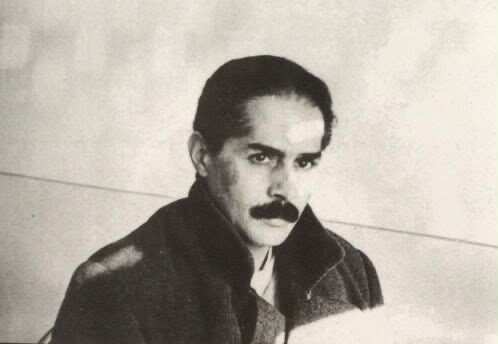
Among twentieth-century Iranian poets, Akhavan stands out for a number of reasons. For one, his verses are saturated by the immanent presence of a distinct cultural and historical tradition, that of Khorasan. Even as he writes in a decidedly modern prosody following the innovations of Nima Yushij, one of the central figures in the development of modern Persian poetry, Akhavan crafts a unique poetic idiom by drawing heavily on his homeland’s long history, oral folklore, and epic memory, in addition to the written, canonical tradition of classical Persian poetry. His modernism thus emerges not as a rupture with tradition, but as its reanimation under new historical conditions.
This is especially clear in Chavushi. In this poem, Akhavan alludes to the poets Hafez, Omar Khayyam, Nima Yushij, and Louis MacNiece, as well as to the Russian novelist Nikolai Gogol. He analogizes the Umayyad Caliph Umar to the Achaemenid King Xerxes and personifies the planets Venus (Nahid) and Mars (Bahram), frequent cosmological metaphors in classical Persian poetry. Akhavan’s derisive and sardonic tone toward these eclectic figures seems at first to topple the icons of an archaic, and indeed hegemonic, literary pantheon standing in the way of artistic experimentation. However, by welcoming these figures into the poem’s own mythical order, Akhavan shows how the symbols structuring cultural and historical memory can be refashioned through the creative act of poetry.
Transgressive critical gestures risk repeating and reifying the logic of the systems they seek to subvert, and it would be naive to assume that Akhavan was ignorant of this possibility. What Akhavan does in this poem is place himself and his reader within a world that is at once radically different from the “old” one but also from itself. Just as our communal memory of the past remains indeterminate and malleable, modernity is never as modern as it seems. Akhavan’s poem forces us to confront the flux of time, a past which is at once ours and yet irrevocably lost to us, all the while calling us to embrace a similarly narrativized, mythologized, and ultimately unknowable, future. Chavushi is neither detached from the social and political realities of its day, where questions of progress and modernization were at the forefront of public discourse, nor is it reducible to them. Its repeated invitation: “Come, let us grab our provisions / Set foot upon the path of no return,” intensifies the uncertainty of departure, rather than resolving it.
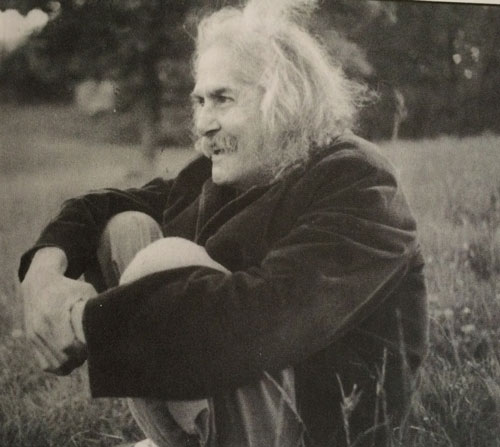
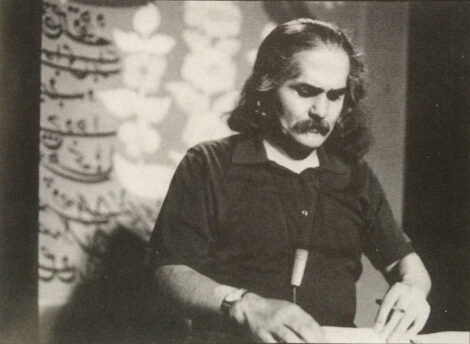
Another striking feature of Akhavan’s poetry is his careful attention to musicality. Throughout the process of translating this poem, we returned regularly to Akhavan’s own recitation, recorded around thirty years after its original publication. The recitation helped us hear Chavushi as a performed call whose pauses, tonal shifts, repetitions, and hesitations shape the poem’s movement. His reading ultimately became inseparable from our translation, and we have attempted to carry into English the drama of his performance. It guided our decisions about pacing, dramatic emphasis, and the degree of strangeness the English should retain.
One example is the phrase “آسمان هرکجا” in the line “ببینیم آسمان هرکجا آیا همین رنگ است؟,” which, following the stress and intonation in Akhavan’s recitation, we chose to translate as “Let us see if the sky of Anywhere / Is the same color as this one,” as opposed to a more idiomatic rendering such as, “Let us see if the sky / Is the same color everywhere.” Here, the uncommon placement of هرکجا, together with the line’s measured phrasing, create a sense of wonder and hesitation that the English version seeks to preserve.
We cite here Akhavan’s introduction to the poem in this recording:
There’s a melody in the repertoire of our music [radif] called chavushi. The person who sings it is called chavushi-khan. They come into a city, a neighborhood, or what have you, and they sing this melody so that people who are hesitating to travel or to go on a voyage – back then travelling to places like Karbala or Mecca was long and costly, and even now it is not so cheap, but anyways, sometimes there were people who were hesitant and uncertain about making the voyage – when they heard this call, they would immediately make the decision to embark on the voyage. And this call is what is meant by chavushi. So here we have recited our own chavushi, not for Karbala or Mecca, but for other kinds of voyages.
***
Chavushi
To:
Hassan Pesta
As they tell of the wayfarers of legend:
Bearing on the back the road’s provisions,
Taking in the grip a bamboo pole,
At times talkative, at times silent,
In their vacant misty space of legend,
There they seek the path,
We too embark a path of our own.
Three paths before us lie:
Upon each
Is etched in stone
A tale — one not found upon the others.
The first: the path of pleasure, comfort, joy,
Tainted by disgrace, yet leading toward the city, the garden, the prosperous.
The second: the path of half shame, half honor,
Uproar if you raise your head
Tranquility if you hold your breath.
The third: the path of no return,
No end.
Here my heart is too tight with longing,
And every instrument ill-tuned.
Come, let us grab our provisions,
Set foot upon the path of no return,
Let us see if the sky of Anywhere
Is the same color as this one.
This voyage, you know well, leads never to the heavens
To Mars, that immortal, bloodthirsty
To Venus, that careless she-wolf widowed whore
Who used to raise her cursed goblet
With Hafez and Khayyam,
A gypsy, she would dance and stomp around,
And now she toasts with Nima and MacNeice
And tomorrow she will raise a glass
To whomever will come after us.
To these it does not lead,
But to the vast and godless plain,
Where a thousand stars
Fluttering their wings
To each beat of my pulse
Wither and fall.
Let this pure sky
Be the pasture of Christ
And other noble ones,
For wretched such as I
Have never known
And will not ever know
Who their fathers are
Or what good they are for.
Come, let us grab our provisions,
Set foot upon the path
To lands whose sight
Runs wakeful, joyous blood
Throughout my veins alive,
Like fire,
Unlike this blood of mine
Old, cold, dark, and sickly.
Like a half-dead worm, no head or tail,
A drunkard stumbling upon the walls
It drags itself along,
Tunneling through the atrium of my poisoned veins,
And to my heart
This chamber with drawn shades.
And asks, its voice a lightless cry,
“Is anyone here?
Hey, I am talking to you, hey!
I said, is anyone here?
Has anyone brought a message?
A glance, perhaps a smile?
The warm embrace of a friend-like hand?”
And sees there is no sound, no familiar light
Not even a trace
Of a dead person’s gaze.
No sound but for the pained flickering
Of a candle languishing
On the brink of death
Approaching dawn
Its hands warmed up to the labor of dying.
And so it exits from the other side,
And moves toward a different chamber
In hopes of drinking in
The fresh and open air.
Yet there the talk of opium and hashish
Hangs, bestowed by that dervish who chants:
“This world is ancient, without foundation,
Woe be upon this world who killed Farhad!”
So there it leaves and seeks the shores
Wandering, wearisome, pokes its head
And asks again, in a chamber with drawn shades,
“Is anyone here?”
And sees the same candle, the same whisper.
Who told you to stay here?
So that you ask
As did that lonely elder
Beset by pain,
“Good Lord, upon which part of this dark night
Am I to hang my tattered cloak?”
Come, let us grab our provisions,
Set foot upon the path
Where? Wherever may come forth.
That place where they say
Our setting sun
Upon the curtain of their dawn
An image draws.
Holding in one hand a gold-woven standard
saying: soon.
Dropping from the other an extinguished torch
crying: late.
Where? Wherever may come forth.
That place where they say
A radiant city blossomed like a rose
From the damp-skirted sea,
Where there are springs from which the crystal-winged
Petals of poetry flow forever.
And from there drinks a man who says:
“Why burden oneself with watering a garden
That grows flowers papery?”
That place where they say
There once was a girl
Whose death was too
Like the death of Taras Bulba,
Unlike my death or yours,
Another kind of pure death.
Where? Anywhere not here.
Caress and torment here I fear alike
Who slaps and who is slapped,
And I fear this image on the wall,
This image in which
Omar cracks the merciless whip of Xerxes
Like a madman,
Not upon the sea,
But upon my back
Upon my shriveled veins
Upon you living
Upon me dead.
Come, let us take the path
To meadows none have sown nor reaped
To lands where all beheld is virgin
And thus has been their form eternally,
Such that they are unsullied and pure.
Toward the joyful desert sun
Who does not leave
A single spot untouched of its warm blood.
Like the shell of an almond
We toss our boat into the velvet sea
Into its boundless green,
And teach those white birds of its sails
To hold close the easterly winds
And forth we drive
At times swift, at times slow.
Come, O my weary-minded friend!
O you whose heart is like mine severed!
Here my heart is too tight with longing.
Come, let us grab our provisions,
Set foot upon the endless path…
Tehran, March/April 1956
چاووشی
به:
حسن پستا
بسان رهنوردانی که در افسانهها گویند،
گرفته کولبارِ زادِ ره بر دوش،
فشرده چوبدست خیزران در مشت،
گهی پرگوی و گه خاموش،
در آن مهگون فضای خلوت افسانگیشان راه می پویند،
ما هم راه خود را میکنیم آغاز.
سه ره پیداست.
نوشته بر سر هر یک به سنگ اندر،
حدیثی کهش نمیخوانی بر آن دیگر.
نخستین: راه نوش و راحت و شادی.
به ننگ آغشته، اما رو به شهر و باغ و آبادی.
دودیگر: راه نیمش ننگ، نیمش نام.
اگر سر برکنی غوغا، و گر دم درکشی آرام.
سه دیگر: راه بی برگشت، بی فرجام.
من اینجا بس دلم تنگ است.
و هر سازی که میبینم بدآهنگ است.
بیا رهتوشه برداریم،
قدم در راهِ بیبرگشت بگذاریم؛
ببینیم آسمانِ «هرکجا» آیا همین رنگ است؟
تو دانی کاین سفر هرگز به سوی آسمانها نیست.
سوی بهرام، این جاوید خونآشام،
سوی ناهید، این بدبیوه گرگِ قحبهٔ بیغم،
که میزد جام شومش را به جام حافظ و خیام؛
و میرقصید دستافشان و پاکوبان بسانِ دخترِ کولی،
و اکنون میزند با ساغر «مک نیس» یا «نیما»
و فردا نیز خواهد زد به جامِ هرکه بعد از ما؛
سوی اینها و آنها نیست.
به سوی پهندشتِ بیخداوندیست،
که با هر جنبش نبضم
هزاران اخترش پژمرده و پرپر به خاک افتند.
بهل کاین آسمانِ پاک،
چراگاه کسانی چون مسیح و دیگران باشد؛
که زشتانی چو من هرگز ندانند و ندانستند کآن خوبان
پدرْشان کیست؟
و یا سود و ثمرْشان چیست؟
بیا ره توشه برداریم.
قدم در راه بگذاریم.
به سوی سرزمینهایی که دیدارش،
بسان شعلهٔ آتش،
دواند در رگم خونِ نشیطِ زندهٔ بیدار.
نه این خونی که دارم؛ پیر و سرد و تیره و بیمار.
چو کرم نیمهجانی بیسر و بیدم
که از دهلیزِ نقبآسای زهراندودِ رگهایم
کشاند خویشتن را، همچو مستان دست بر دیوار،
به سوی قلب من، این غرفهٔ با پردههای تار.
و میپرسد، صدایش نالهای بینور:
– «کسی اینجاست؟
هلا! من با شمایم، های! … میپرسم کسی اینجاست؟
کسی اینجا پیام آورد؟
نگاهی، یا که لبخندی؟
فشارِ گرمِ دستِ دوستمانندی؟»
و میبیند صدایی نیست، نور آشنایی نیست، حتی از نگاهِ
مردهای هم، ردّ پایی نیست.
صدایی نیست الا پتپتِ رنجور شمعی در جوارِ مرگ.
ملول و با سحر نزدیک و دستش گرمِ کارِ مرگ،
وزآنسو میرود بیرون، به سوی غرفهای دیگر،
به امّیدی که نوشد از هوای تازهٔ آزاد،
ولی آنجا حدیث بنگ و افیون است – از اعطای درویشی
که میخواند:
«جهان پیر است و بیبنیاد، ازین فرهادکش فریاد…»
وزآنجا میرود بیرون، به سوی جمله ساحلها،
پس از گشتی کسالتبار،
بدانسان باز میپرسد – سر اندر غرفهٔ با پردههای تارـ:
– «کسی اینجاست؟»
و میبیند همان شمع و همان نجواست.
که می گوید بمان اینجا؟
که پرسی همچو آن پیرِ به درد آلودهٔ مهجور:
خدایا «به کجای این شبِ تیره بیاویزم قبای ژندهٔ خود را؟»
بیا ره توشه برداریم.
قدم در راه بگذاریم.
کجا؟ هر جا که پیش آید.
بدانجایی که میگویند خورشید غروب ما،
زند بر پردهٔ شبگیرشان تصویر.
بدان دستش گرفته رایتی زربفت و گوید: زود!
وزین دستش فتاده مشعلی خاموش و نالد: دیر!
کجا؟ هر جا که پیش آید.
به آنجایی که میگویند
چو گل روییده شهری روشن از دریای تردامان،
و در آن چشمههایی هست،
که دایم روید و روید گل و برگ بلورین بال شعر از آن.
و مینوشد از آن مردی که میگوید:
«چرا بر خویشتن هموار باید کرد رنج آبیاری کردن باغی
کزآن گل کاغذین روید؟»
به آنجایی که میگویند روزی دختری بودهست
که مرگش نیز (چون مرگ تاراس بولبا
نه چون مرگ من و تو) مرگ پاکِ دیگری بودهست،
کجا؟ هر جا که اینجا نیست.
من اینجا از نوازش نیز چون آزار ترسانم.
ز سیلیزن، ز سیلیخور،
وزین تصویرِ بر دیوار ترسانم.
درین تصویر
عُمَر با سوطِ بیرحم خشایرشا،
زند دیوانهوار، اما نه بر دریا؛
به گردهیْ من، به رگهای فسردهیْ من،
به زندهیْ تو، به مُردهیْ من.
بیا تا راه بسپاریم
به سوی سبزهزارانی که نه کس کِشته، نَدْروده
به سوی سرزمینهایی که در آن هر چه بینی بکر و دوشیزهست
و نقش رنگ و رویش هم بدین سان از ازل بوده،
که چونین پاک و پاکیزهست.
به سوی آفتاب شادِ صحرایی،
که نگذارد تهی از خونِ گرم خویشتن جایی.
و ما بر بیکرانِ سبز و مخملگونهٔ دریا،
میاندازیم زورقهای خود را چون کُلِ بادام.
و مرغانِ سپیدِ بادبانها را میآموزیم،
که باد شُرطه را آغوش بگشایند،
و میرانیم گاهی تند، گاه آرام.
بیا ای خستهخاطر دوست! ای مانند من دلکنده و غمگین!
من اینجا بس دلم تنگ است.
بیا رهتوشه برداریم،
قدم در راه بیفرجام بگذاریم…
تهران، فروردین ۱۳۳۵
Discover more from Ajam Media Collective
Subscribe to get the latest posts sent to your email.


