


This post is part of Tarjomeh, a series of original poetry translations from Persian to English. Organized by editor Ashkaan Kashani, Tarjomeh poses the following questions: “When and where does Persian poetry become modern? How does modernity emerge within a millennium-old poetic tradition?” By asking readers and contributors to approach this question through the act of translation itself, Tarjomeh sets out to explore translation and poetry as one and the same creative process – discursive practices defined by their fissures, gaps, silences, and remainders.
Translated and introduced by Mariam Rahmani, the author of Liquid: A Novel. Rahmani’s latest work is a translation of Farzaneh Milani’s celebrated biography of the midcentury Iranian poet Forugh Farrokhzad, published this February as Another Birth: The Life and Legacy of Forugh Farrokhzad.
***
Years ago, I was asked to give a toast at a friend’s wedding. I did not grow up with this tradition, and it has always struck me as a little too close to PDA — what could I say to my friend and this man to whom she’d chosen to yoke her life that might interest her parents, our friends? Wouldn’t a private card be more suitable?
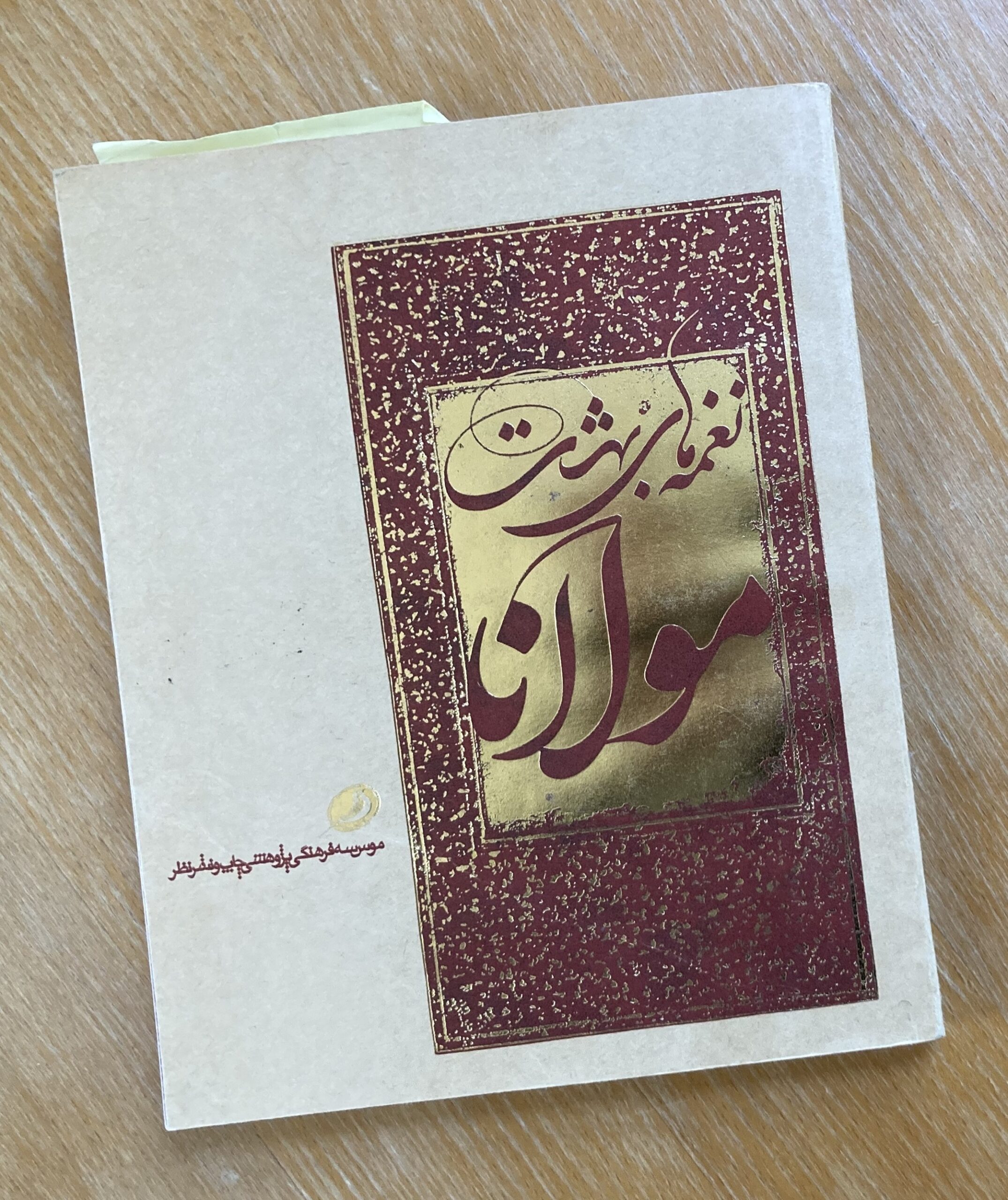
I decided to translate some lines by Maulana, also known as Rumi, gifting the couple love as he’s so masterfully caught it. A ghazal, a form as ingrained in Persian poetry as the sonnet, seemed the right move. Leafing through a bilingual edition I once picked up in Tehran for no better reason than its cover—burgundy and gold leaf against plain recycled beige—I landed on Ghazal 2214 from the Divān-e Shams. The simplicity of the refrain “من و تو” (man o tu) touched me: “you and I,” as I have it, though Franklin D. Lewis’ rendition, “me and you,” sounds rather sweet in its colloquialism.
I challenged myself, above all, to recreate this ghazal’s crystalline ring. Clean, cool. I wanted a poem that is both contemporary and accurate, steadfast in its faith to the original.
Tripping on what I finally realized was a conjunction of prepositions, “ بدان سان” (bidānsān), rendered in my translation as “this way”, I took myself to the library and consulted the usual respected translators of Rumi. I couldn’t locate this particular ghazal in the Nicholson — either he didn’t like it enough to include it in his 1898 Selected Poems From The Divani Shamsi Tabriz, or I missed it — but I did find a version by A.J. Arberry, who first published his version of the ghazal in 1968, and the more recent Lewis quoted above, from 2007.
To my reading, both Arberry and Lewis overinterpret the ghazal, adding lines and figures that simply are not there. Sticking to fourteen lines was essential, though I did, ultimately, abandon the couplets for stanza breaks to help the reader make meaning of the way the poem flits, sparrow-like, from subject to subject. I wanted you and I to be able to read it—moreover, to be able to hear it read—once and understand it.
Keeping true to what we might now call the poem’s queerness—that is, its homoeroticism—was part of that. First and second-person pronouns are gender neutral in Persian and English. While convenient for the translator, this common linguistic feature has also made Sufi poetry vulnerable to a kind of straightening: translators can easily obfuscate what would have been understood as same sex desire, and they do. While my translation does not scream “gay” – to clarify that would have required embellishing the text – I hope that its accurate rendition of the day’s beauty standards, as in the androgynous yet boyish beloved’s “moonface,” will be properly interpreted by knowing readers. More so, I hope that lovers of all kinds might read it to each other and see their own love mirrored therein.
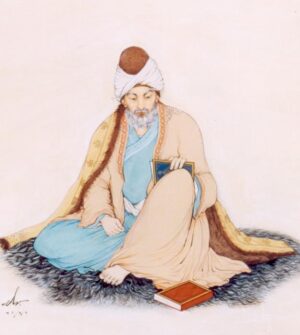
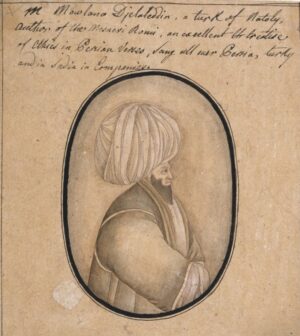
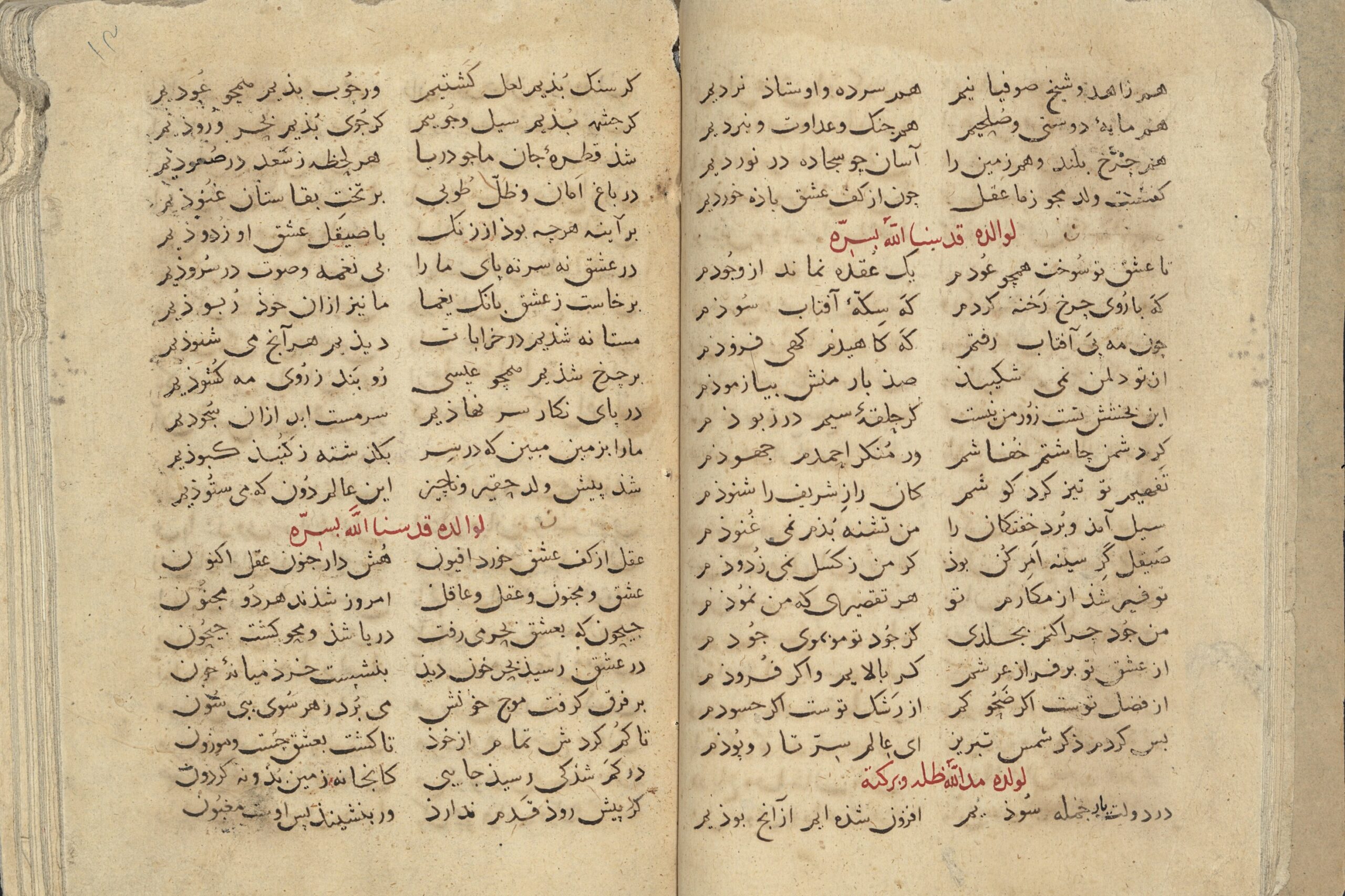
To call literature “timeless” is a cliché. And yet this thirteenth-century poem seems to beckon the future I am now living as a writer and reader of English. Years after finishing my first draft, I remain fascinated by the strangely modern turn in the fourth couplet: “You and I without a you or I will make a plural in ecstasy.” The line — a mere half-line according to the terms of classical Persian poetry, one single hemistich — plays on grammar and the strictures of language in a way that prefigures later poetry and even contemporary literary concerns. I read it as a metafictional moment, a wink by the author that draws our attention to the limitations of the form. How to express the ecstasy – ذوق (zawq) – of this eviscerating love when not only language, but our entire culture, indeed, our understanding of the world, assumes the coherence of the individual subject?
The “we” that reemerges in the next couplet – “when we laugh this way, you and I” – then gratifies us. Yet that first-person plural pronoun – unlike man (I/me) and tu (you) – never appears as such in the original, given that Farsi is a pro-drop language: like Spanish, the pronoun can be dropped and the subject assumed based on the verb’s conjugation. And so in the original, the first-person plural is understood, yet goes unnamed.
I cannot think of a better metaphor for companionship. Thanks to translation, in toasting my friends that summer evening, I didn’t have to.
***
Cool is our breath as we sit in the courtyard, you and I,
two in form and figure but one in soul, you and I—
birds’ breath and trees’ sighs water our garden green.
When we step into paradise, you and I,
the stars will turn to look at us;
moonfaced, we shall turn to them, you and I.
You and I without a you or I will make a plural in ecstasy,
happy, far from talk and all that nonsense, you and I—
when we laugh this way, you and I,
celestial birds will parrot our sweet tongues.
What could be stranger than you and I tucked in our corner,
east and west in the same breath, you and I,
mapped once onto this world and once more on the other
in a forever heaven and in love’s sweetscape, you and I.
***
خنک آن دم که نشینیم در ایوان من و تو
بدو نقش و بدو صورت بیکی جان من و تو
داد باغ و دم مرغان بدهد آب حیات
آن زمانی که درآییم بَبُستان من و تو
اختران فلک آیند بنظارۀ ما
مهِ خود را بنماییم بدیشان من و تو
من و تو بی من و تو جمع شویم از سرِ ذوق
خوش و فارغ ز خرافات پریشان من و تو
طوطیان فلکی جمله شکرخوار شوند
در مقامی که بخندیم بدانسان من و تو
این عجبتر که من و تو به یکی کُنج اینجا
هم در این دم بعراقیم و خراسان من و تو
به یکی نقش بر این خاک و بر آن نقش دگر
در بهشت ابدی و شکرستان من و تو
Discover more from Ajam Media Collective
Subscribe to get the latest posts sent to your email.


