


Laraib Fatima Warsi is a journalist based in Lucknow and holds an M.A. in Convergent Journalism from Jamia Millia Islamia in New Delhi. She writes about culture, history, food, and the people and places that bring them to life. All images were taken by the author.
***
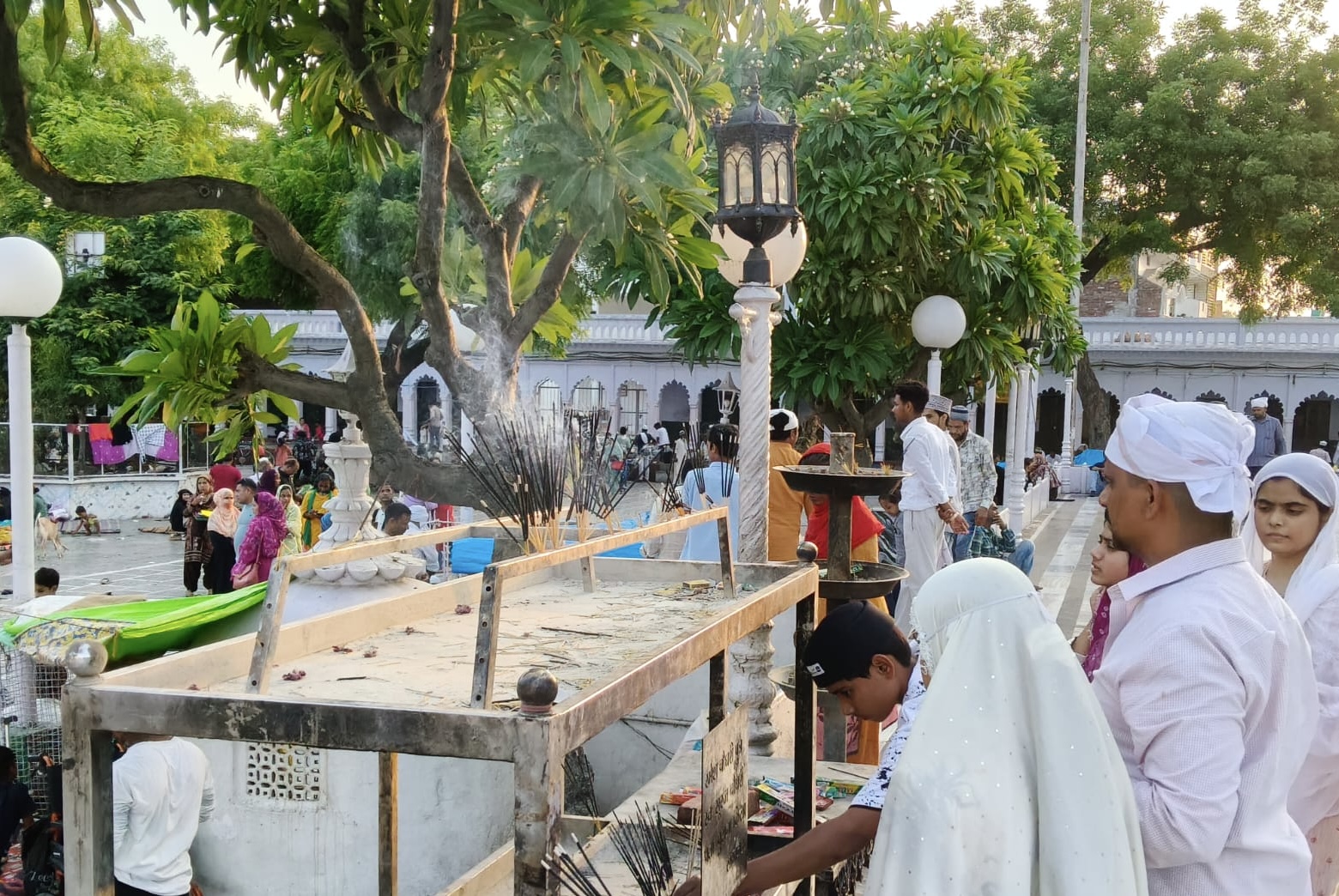
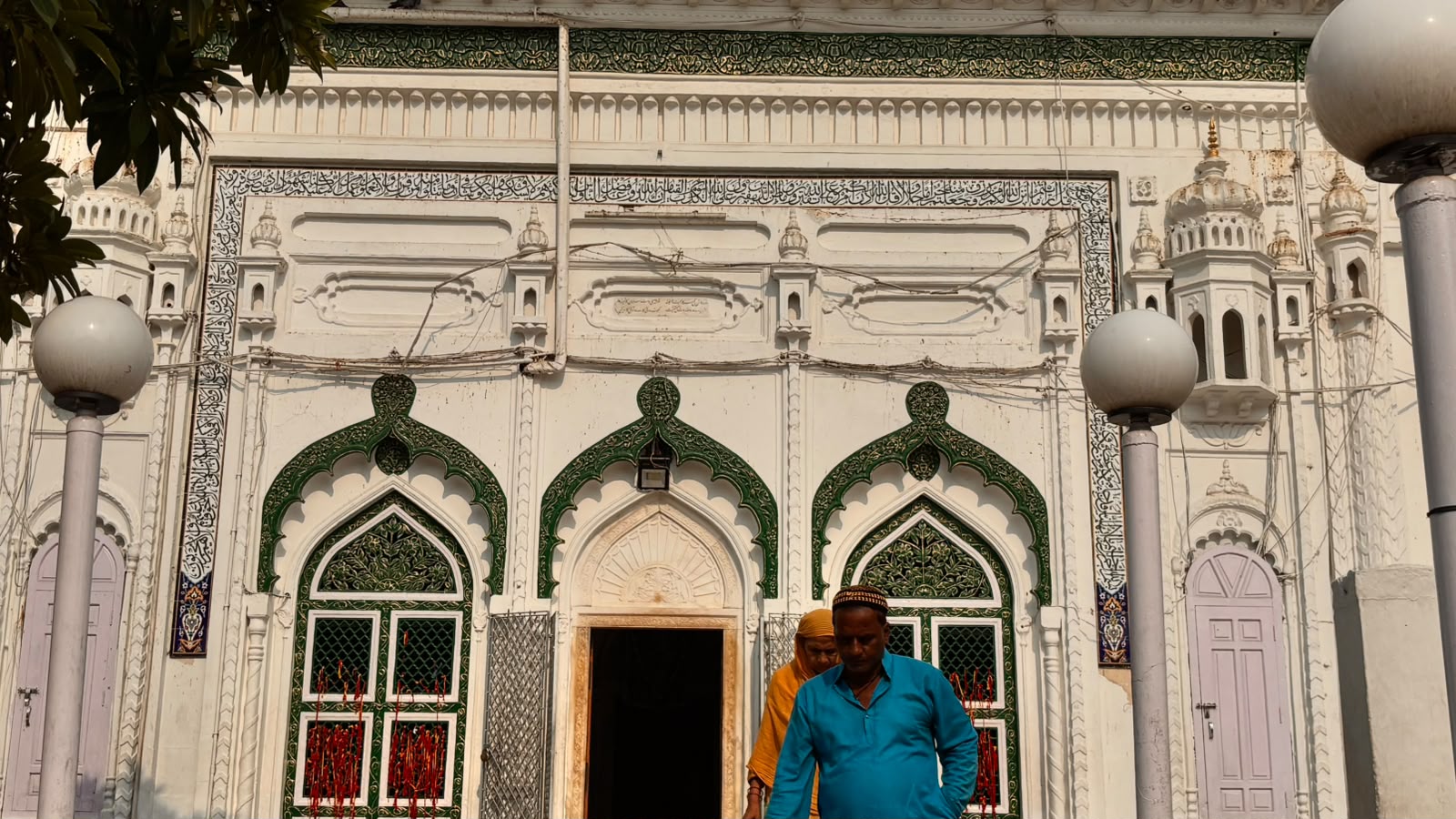
As dusk settles, the shrine of Haji Waris Ali Shah in Dewa Sharif fills with a quiet expectancy. Men sit cross-legged along the edges of the raised platform known as the chabutra, as children weave through the courtyard, and the faint scent of incense settles into the stone. The shrine draws devotees in search of blessings, community and spiritual solace.

Dewa Sharif is located about 30 kilometres from Lucknow, the capital of Uttar Pradesh in northern India. It lies within the historic region of Awadh, a landscape of Sufi shrines, Urdu poetry, and a culture of tehzeeb (refined etiquette) that has long drawn together people from different religious backgrounds.
Professional singers who perform qawwali, a form of Sufi devotional music, prepare for the evening mehfil gathering. In the meantime, the space is filled with other sounds – children playing, women seated in small groups chatting quietly, many with dupattas drawn over their heads, as the call for evening prayer nears.
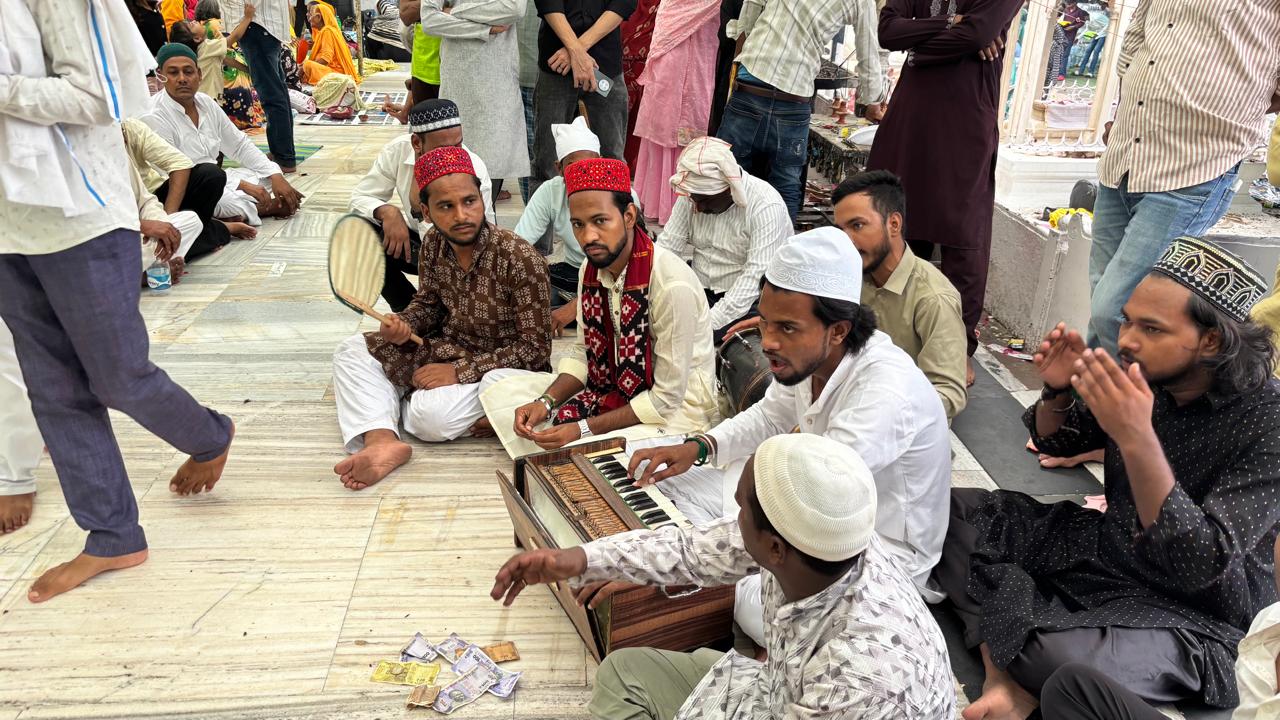
The qawwali begins gradually. A harmonium strikes the opening notes, followed by Man Kunto Maula, which marks the beginning of the mehfil-e-sama (a qawwali gathering). Derived from a saying attributed to the Prophet Muhammad – “Whoever accepts me as their master, Ali is their master too” – it is often the first composition sung before the gathering moves into naats (devotional poetry in praise of the Prophet Muhammad), ghazals (a poetic form centred on love and longing), and qawwalis.
The lead singer takes up the opening verse, and one by one the other qawwals join in, punctuating the performance with rhythmic claps. As the music gathers momentum, the atmosphere shifts: conversations recede, people turn towards the performers, and the courtyard comes alive.
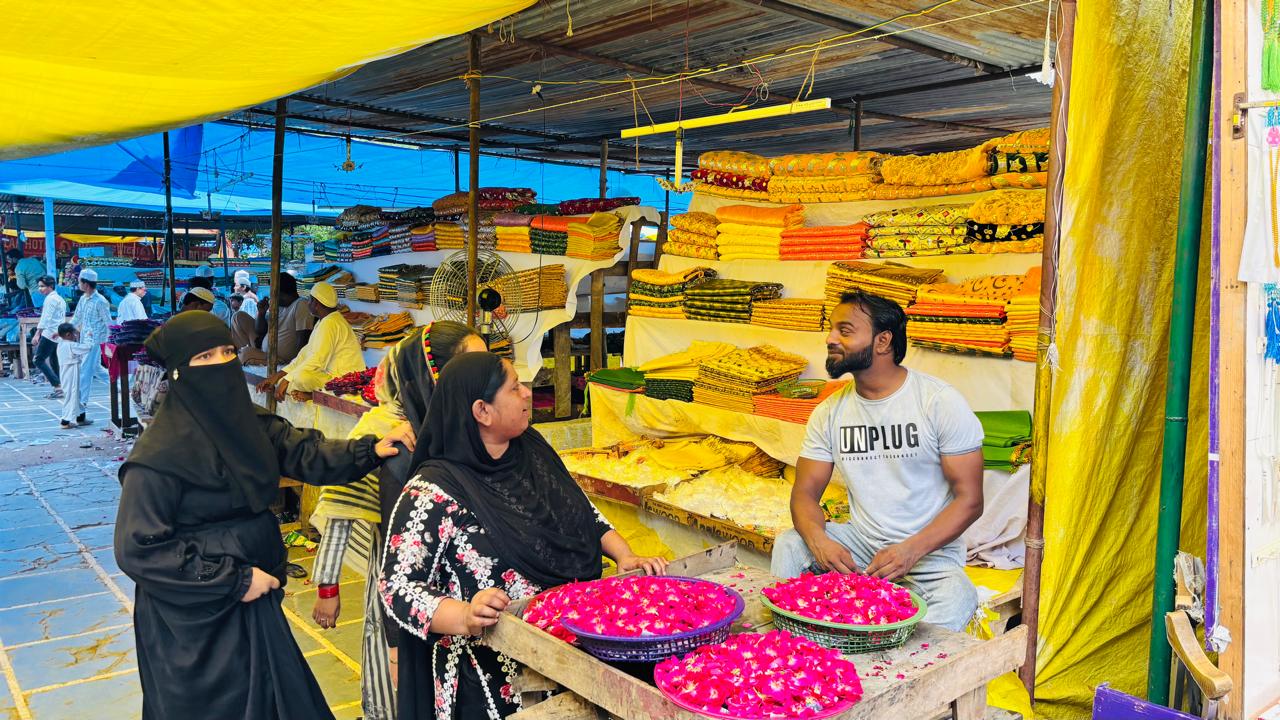
Among the compositions regularly heard at the shrine are the verses of Bedam Shah Warsi.
آدم سے لائی ہے ہستی میں آرزوئے رسول
کہاں کہاں لیے پھرتی ہے جستجوئے رسول
عجب تماشا ہے میدانِ حشر میں، بےدم
کہ سب ہوں پیشِ خدا اور میں روبروئے رسول
Adam se laayi hai, hasti mein aarzoo-e-rasool
Kahan kahan liye phirti hai justju-e-rasool
Ajab tamasha hai maidan-e-hashr mein Bedam,
Ke sab ho pesh-e-khuda aur main rubaru-e-rasool
Since the time of Adam, the longing for the Prophet has existed within creation
The search for him has carried people across countless places
What a wondrous sight it will be on the Day of Judgement, Bedam,
When all stand before God, while I stand face to face with the Prophet
These verses emerge from the devotional tradition of Haji Waris Ali Shah, the 19th-century Sufi saint whose shrine stands at the centre of Dewa Sharif.
Haji Waris Ali Shah (1807-1905), founded the Warsi Silsila, a spiritual lineage that shapes devotional life in the town. Revered by followers as Sarkar Waris Pak, he traced his lineage to the Prophet Muhammad and attracted disciples from across the subcontinent. The Warsi Silsila placed emphasis on love, service and devotion, and encouraged followers to look beyond distinctions of caste, class and religion.
Traditions associated with the shrine have long reflected a shared cultural life that resists neat boundaries. Among the most visible expressions of this is the annual celebration of the Hindu holiday of Holi within this Muslim shrine complex, an unusual sight that has made Dewa Sharif a frequently cited example of North India’s syncretic devotional culture.
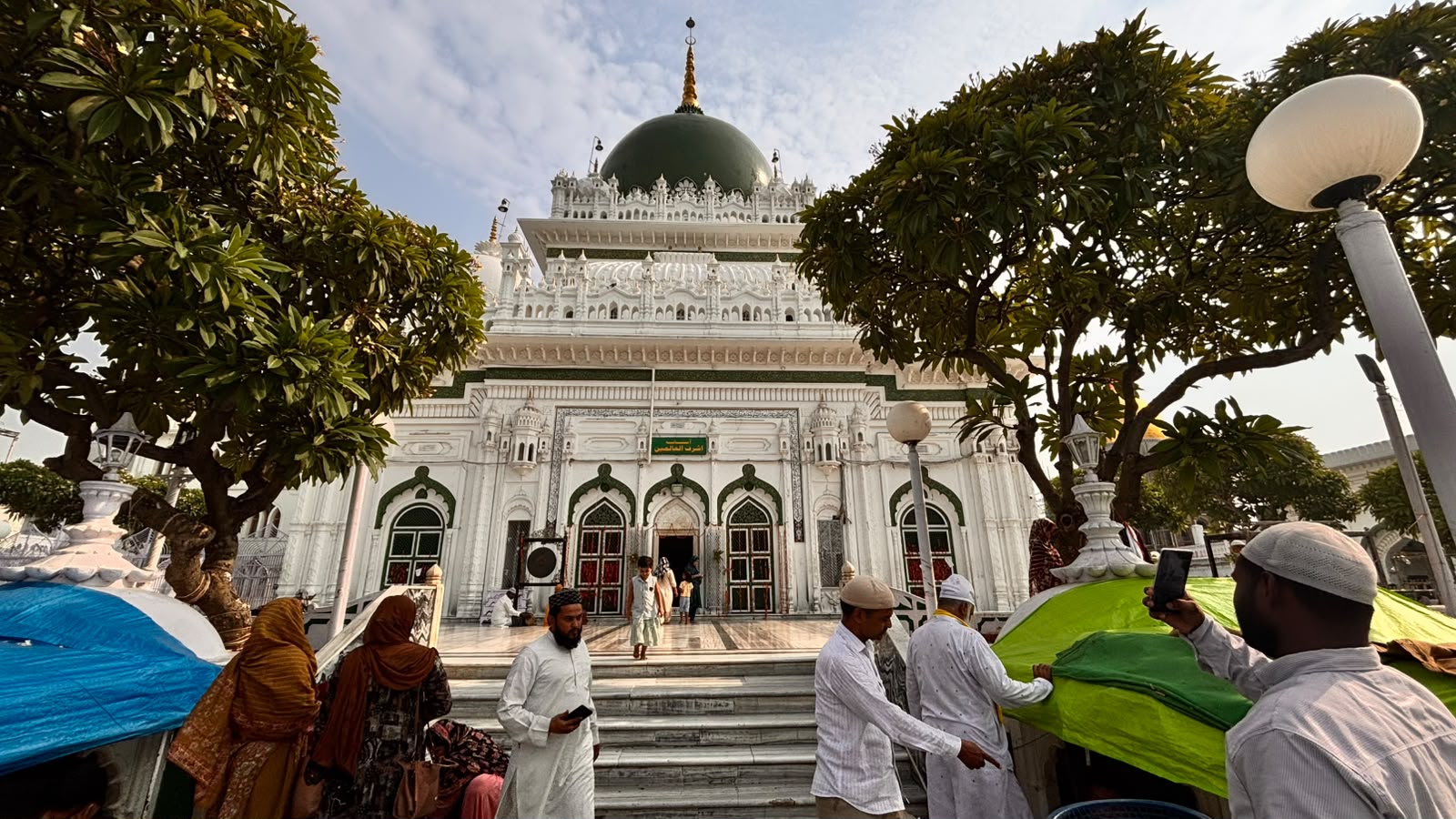
Among those shaped by this devotional world was Bedam Shah Warsi, one of the most enduring poetic voices associated with the Warsi tradition.
Today, his tomb lies near the shrine of Haji Waris Ali Shah’s father, within the grounds that host the annual Kartik Dewa Mela, a large yearly fair named after Kartik, the eighth month of the Hindu lunar calendar.
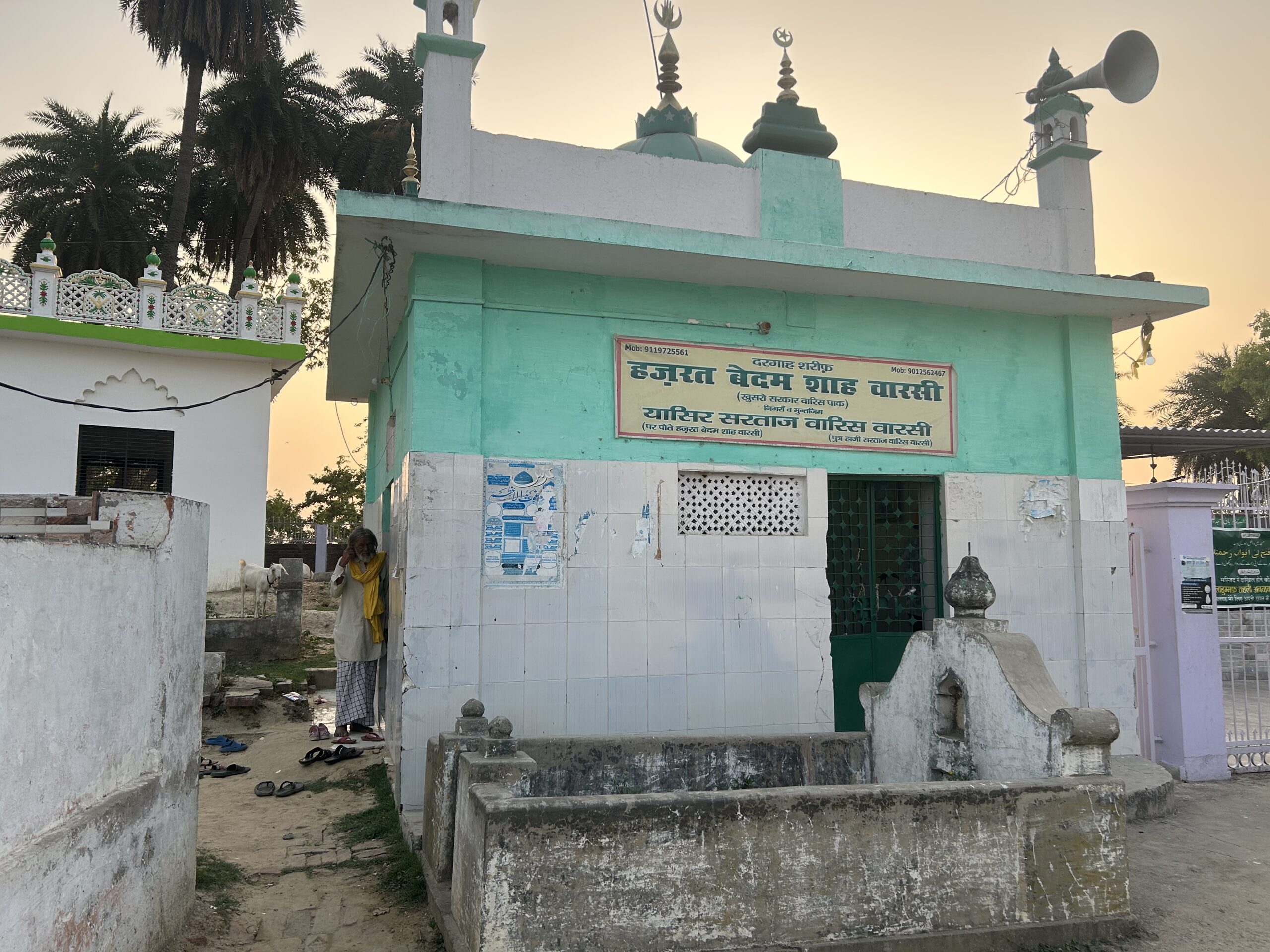
Bedam Shah Warsi was born in 1876 in Etawah, Uttar Pradesh. Born Syed Ghulam Hussain into a modest family, he had no formal claim to literary or spiritual authority. His life took a decisive turn when he entered the fold of Haji Waris Ali Shah, who named him ‘Bedam’ (بی دم) – one who is without breath or self.
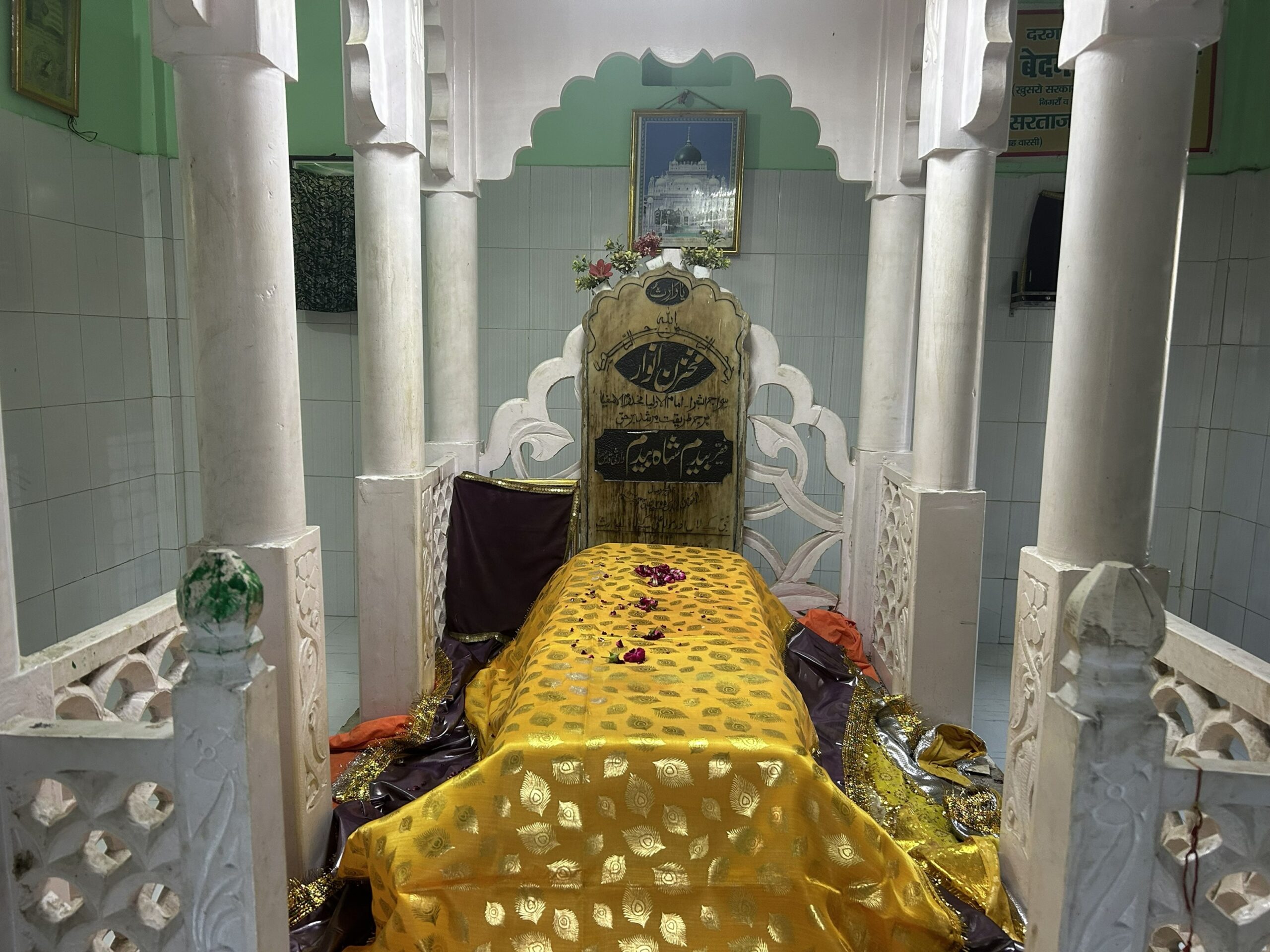
His writings span Urdu, Arabic, Persian, Hindi, Awadhi and Sanskrit, including hundreds of ghazals and naats. Rooted in the Warsi Silsila, Bedam’s poetry reflects a tradition where ishq (love) is a path of surrender, drawing on metaphors from Sufi traditions that extend across the Persianate world.
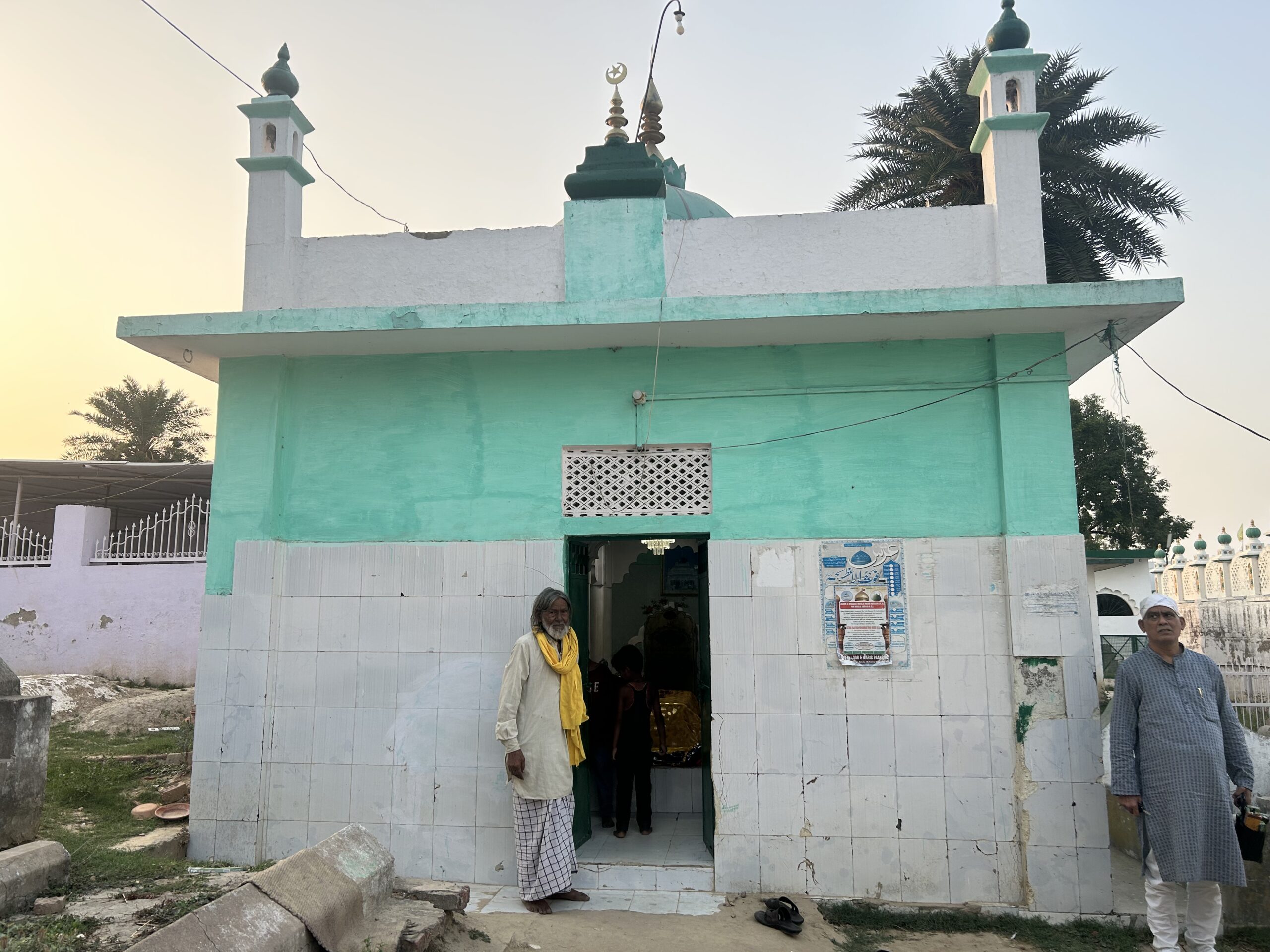
With every new composition, Bedam returned to Waris Ali Shah’s shrine, reciting it there, as though offering it to his murshid (guide), before letting it travel into the world. His verses move between longing and nearness, blurring the line between the two. In one verse, Bedam frames the seeker’s yearning as something that stretches across both physical and metaphysical distance:
زمین سے آسمان تک ایک سناٹے کا عالم ہے
نہیں معلوم میرے دل کی ویرانی کہاں تک ہے
زمین سے آسمان تک، آسمان سے لامکاں تک ہے
خدا جانے ہمارے عشق کی دنیا کہاں تک ہے
Zameen se aasman tak ek sannate ka aalam hai,
Naheen maalum mere dil ki viraani kahaan tak hai,
Zameen se aasman tak, aasman se la-makaan tak hai,
Khuda jaane hamare ishq ki duniya kahaan tak hai.
From earth to sky stretches a realm of silence;
I do not know how far the desolation of my heart extends
From earth to sky, and beyond the sky to the realm of the unknowable,
God alone knows how vast the world of our love is.
Personal longing expands into something cosmic, suggesting that the distance between seeker and beloved is immeasurable, yet held within the same universe of devotion.
As a disciple of Haji Waris Ali Shah, Bedam adopted the yellow ihram worn by the Warsi fuqra, followers who renounce material life to walk the path of devotion. Similar in form to the white ihram worn during Hajj and Umrah, it signified a life of spiritual discipline and renunciation.
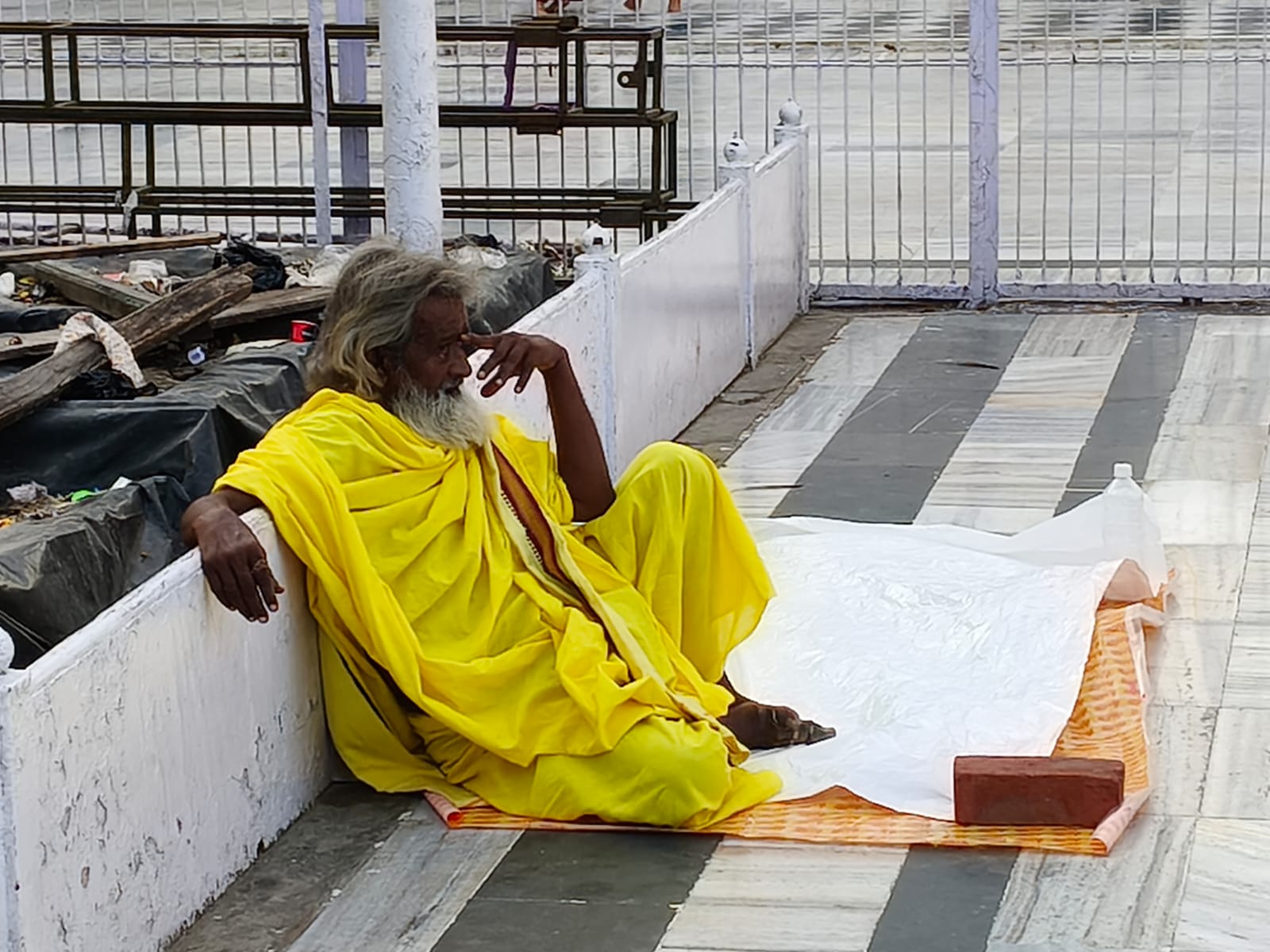
After Waris Ali Shah’s death, Bedam also played an organisational role within the Halqai-Fuqrai-Warsi, a collective of followers founded by his master. As its first nazim (secretary), he helped sustain the tradition across generations. Even today, Bedam’s verses are heard more often than they are read, through qawwali gatherings, collective recitation, and performance.
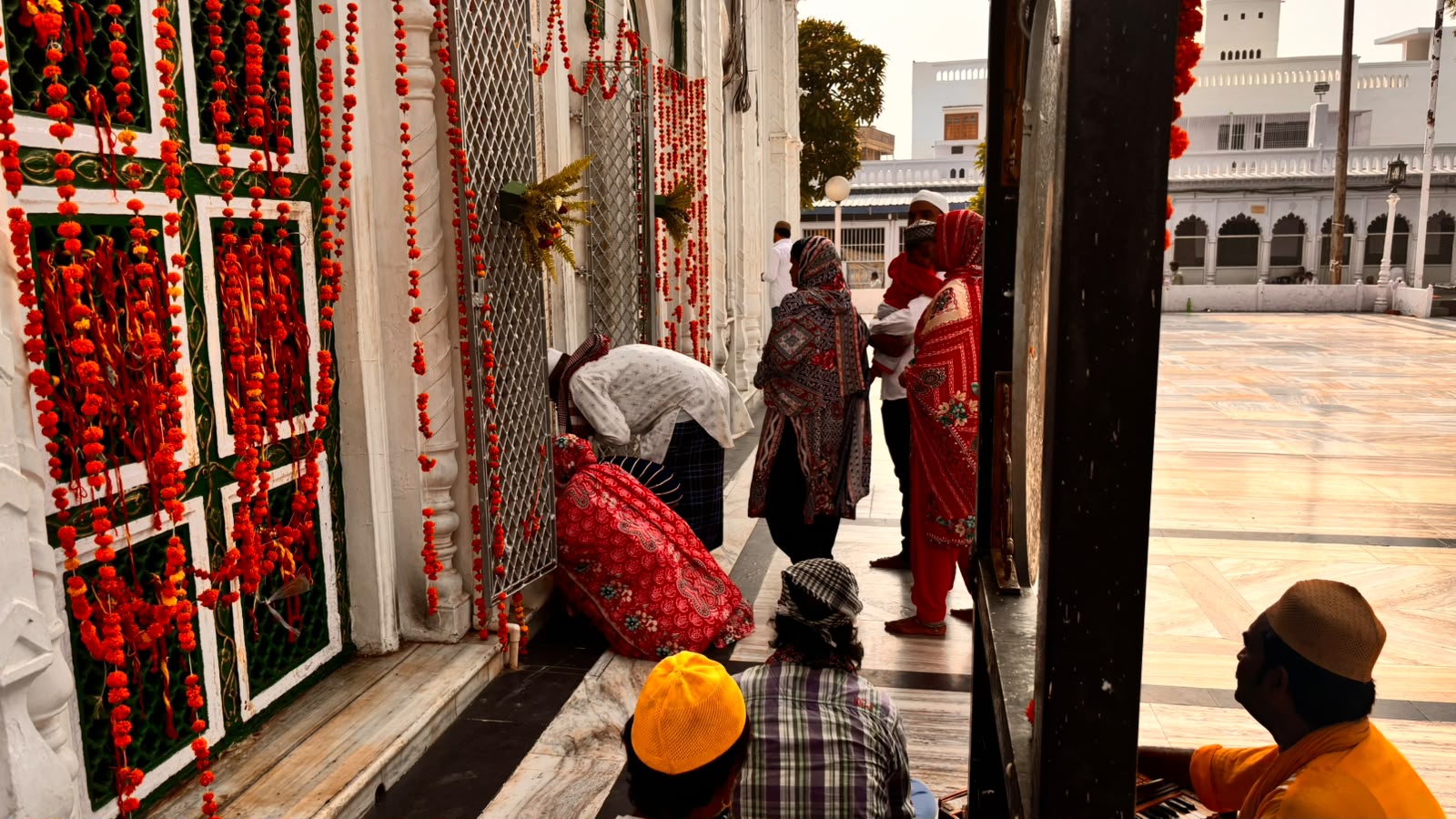
I spoke to Hasan Waris, 38, a qawwal based in Dewa Sharif who has been performing for nearly two decades. He told me that singing Bedam’s poetry is not merely performance but itself an act of devotion. “These are words that come straight from the heart. There is no ‘I’ in his poetry. Until a person lets go of the self, they cannot truly gain anything.”
Bedam’s compositions continue to resonate across audiences. Among the most widely performed are verses such as:
بےخود کیے دیتے ہیں، اندازِ حجابانہ
آ دل میں تجھے رکھ لوں، اے جلوۂ جانانہ
اتنا تو کرم کرنا، اے چشمِ کریمانہ
جب جان لبوں پر ہو، تم سامنے آ جانا
Bekhud kiye dete hain, andaz e hijabana
Aa dil mein tujhe rakh lun, Ae jalwa-e-jananan
Itna toh karam karna, aey chashme karimana
Jab jaan labon par ho tum samne aa jaana
Your veiled manner leaves me beside myself;
Come, let me keep you within my heart, O beloved presence
Grant me at least this mercy, O benevolent gaze,
When life reaches my lips in its final moment, appear before me
دیکھ لو شکل میری، کس کا آئینہ ہوں میں
یار کی شکل ہوں، اور یار پہ فنا ہوں میں
پتا لگائے کوئی، کیا میرے پتے کا پتا
میرے پتے کا پتا ہے، کہ لاپتا ہوں میں
Dekh lo shakal meri, kiska aaina hun main,
Yaar ki shakal hun, aur yaar pe fanaa hun main
Pata lagaye koi, kya mere pate ka pata,
Mere pate ka pata hai, ke lapata hun main
Look at my face and see whose reflection I carry
I reflect the Beloved, and in the Beloved I have lost myself entirely
Let someone try to discover where I may be found,
The only clue to my whereabouts is that I am lost to myself
For Suhail Ahmed, a qawwal who has been performing for more than two decades, his relationship to Bedam’s poetry began early. “I learnt it by attending mehfils, just listening again and again…it became a part of me,” he says. Growing up in a family of performers, he started singing at a young age alongside his father. In gatherings associated with Haji Waris Ali Shah, requests for Bedam’s poetry are frequent. “People ask for it, and we sing it for them,” he says.
During the annual Urs, the death anniversary commemoration of Haji Waris Ali Shah, the atmosphere changes noticeably. “The moment we begin, the mehfil shifts,” he told me. As the performance gathers momentum, listeners begin humming along to familiar verses. Some record the moment on their phones or place video calls to family members, bringing them into the gathering from afar.
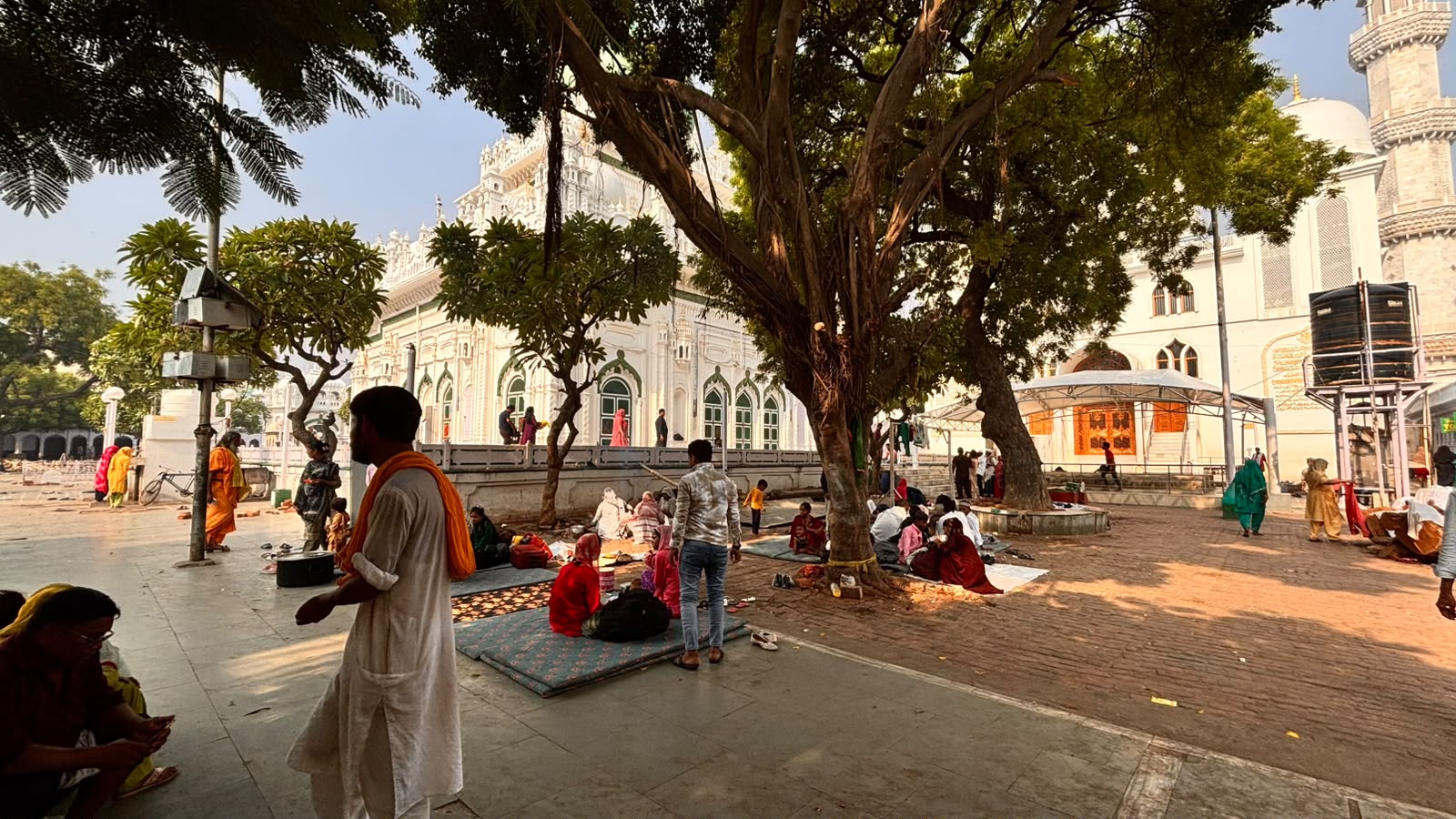
Different qawwal groups perform in succession, with lead singers carrying the main verses and accompanying qawwals responding in chorus. “When I sing his composition, it feels as if you are face to face with your murshid,” Ahmed says. “That is the kind of effect it has.”
From shrines in Awadh to qawwali circuits in Sindh, and further into diasporic mehfils in cities far removed, Bedam’s kalam (devotional poetic compositions) continues to travel — carried not by institutions, but by voices.
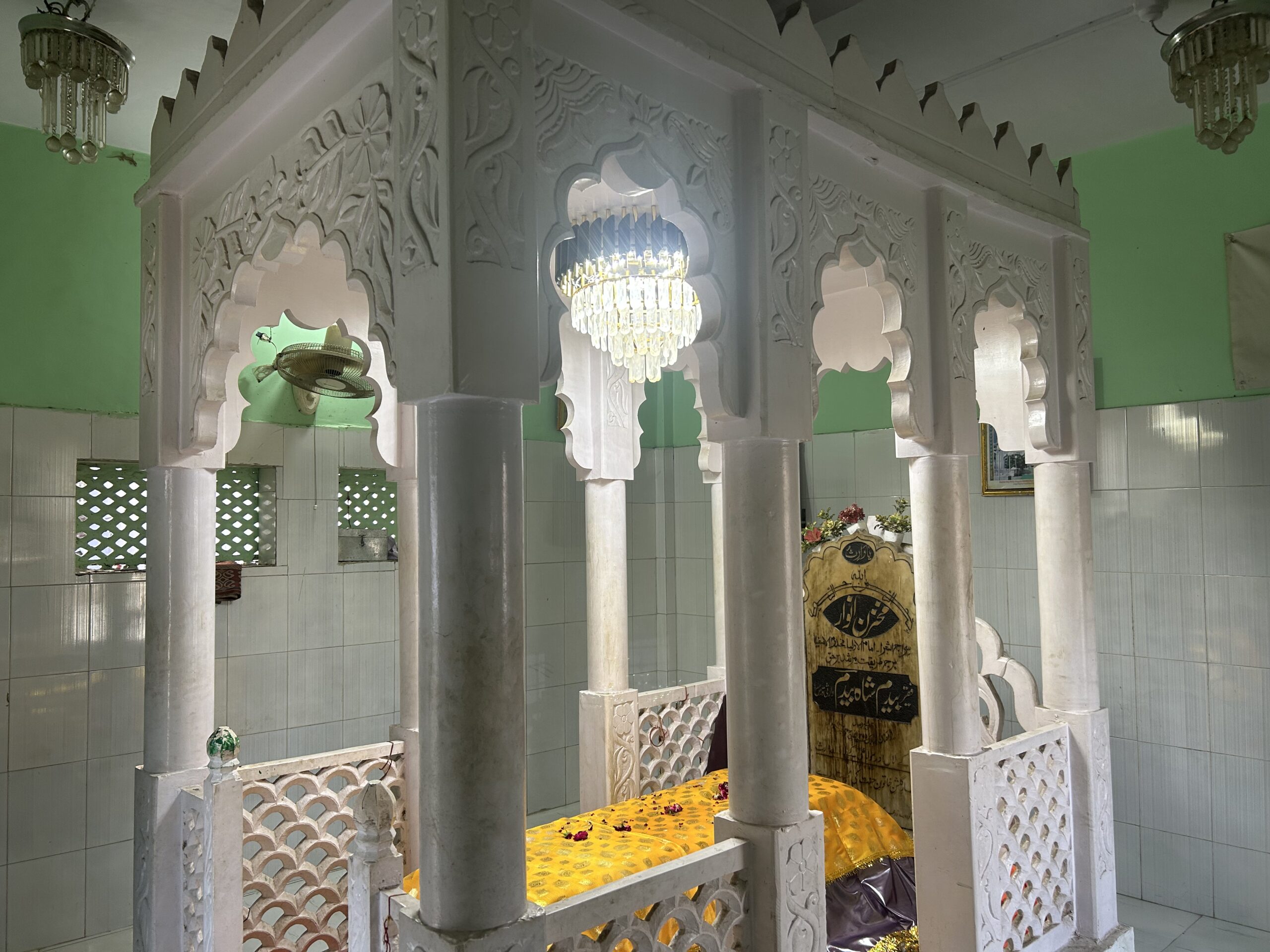
Sufiya Bano, 39, homemaker, a regular visitor to Dewa Sharif, told me “I feel a sense of peace when I come here and listen to Bedam’s poetry being sung…as if he is alive and present in the moment. To be here, in the same space, breathing the same air as him, feels like enough. What more does one need?”

Among those who return are not only those who inherit the tradition, but those who arrive into it. Manish Mehrotra, who runs a small organisation dedicated to preserving and promoting Bedam Shah Warsi’s poetry, came to the tradition through years of listening and repeated visits. “I didn’t come here through lineage,” he says. “I kept returning because something here stayed with me.”
Raised in a Hindu household, he does not describe it as a crossing over but as a deepening. “When I listen to Bedam’s poetry, it doesn’t feel separate from anything I already believe in; it feels like an extension of it.” Mehrotra’s journey reflects the way Bedam’s poetry continues to attract listeners from diverse backgrounds through repeated encounters with the shrine and its devotional culture.
The shrine continues to draw people across religious backgrounds, reflecting the Ganga-Jamuni tehzeeb of North India, where participation in shared cultural and devotional spaces takes precedence over identity. The celebration of Holi within the shrine complex, the annual Kartik Dewa Mela and the participation of visitors from different faiths are part of this lived tradition.
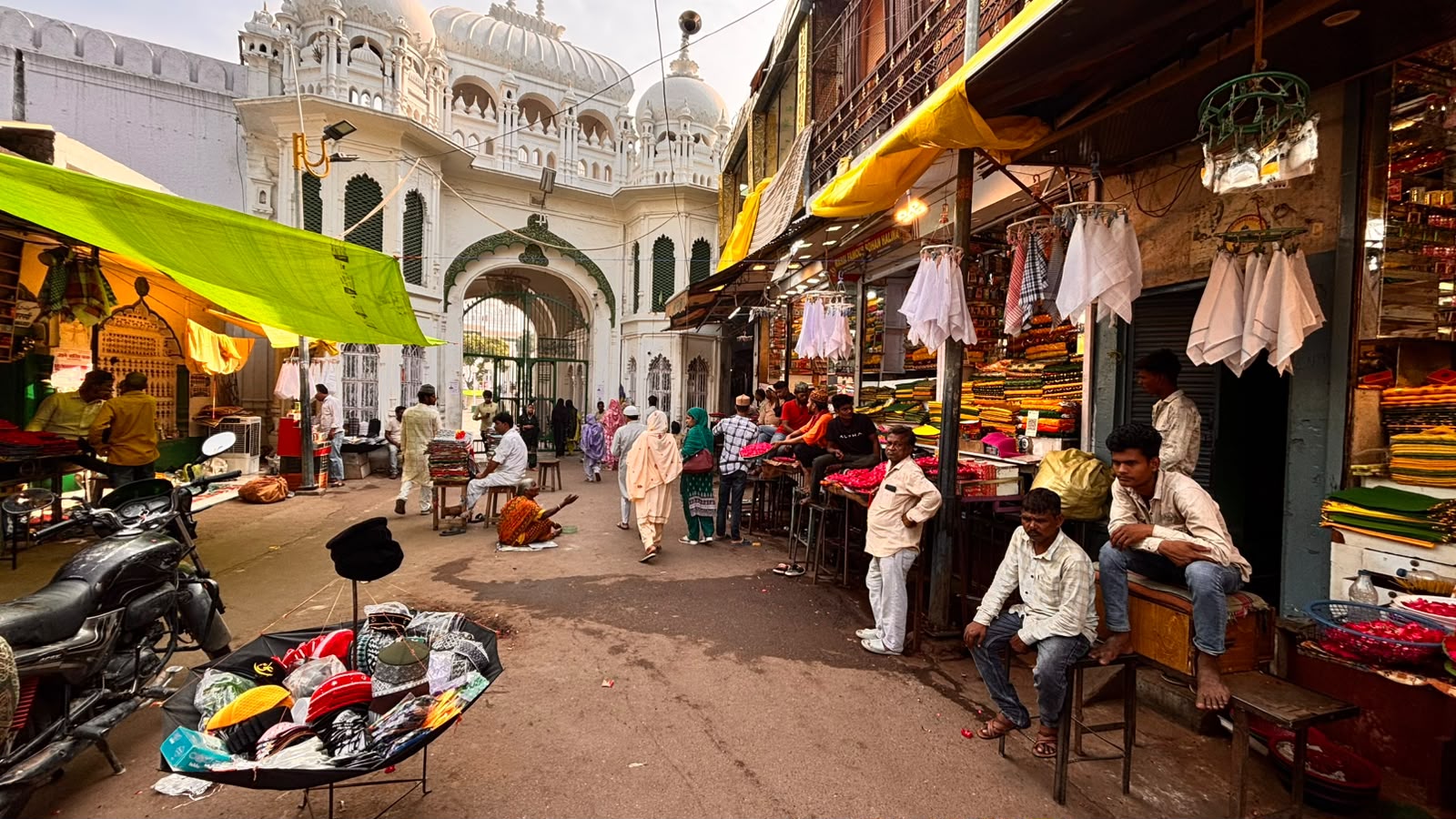
At a time when religious identities are increasingly drawn into sharper lines, spaces like these operate as sites of overlap. The persistence of such traditions quietly resists the idea that faiths exist in isolation.
The Digital Afterlife
If the mehfil has long been the primary space where Bedam Shah Warsi’s kalam lives, it has, in recent years, also found another kind of gathering: on screens.
In Karachi, Pakistan, a 42-year-old businessman named Zohair first encountered Bedam’s words in the mid-2000s through a YouTube recording of Abida Parveen, the renowned Pakistani Sufi singer, performing one of his kalams:
خدا جانے کہاں سے جلوۂ جانانہ کہاں تک ہے
وہیں تک دیکھ سکتا ہے، جس کی نظر جہاں تک ہے
کوئی مر کر تو دیکھے امتحان گاہِ محبت میں
کہ زیرِ خنجرِ قاتل حیاتِ جاوداں تک ہے
Khuda jaane kahan se jalwa e janana kahan tak hai,
Wahin tak dekh sakta hai, jiski nazar jahan tak hai
Koi mar kar toh dekhe imtihaan-gaah-e-mohabbat mein,
Ki zer-khanjar-e-kaatil hayat-e-javeda tak hai.
God alone knows how far the Beloved’s radiance extends,
One can see only as far as one’s vision allows
Let someone surrender themselves to the trial of love and see,
Even beneath the killer’s blade lies the promise of eternal life
“I was completely mesmerised,” Zohair told me in an interview. Since then, Bedam’s poetry has become part of his everyday life, whether while driving or listening online. “There is hardly a mehfil where his poetry is not sung. And if it isn’t, something feels incomplete.”
For Zohair, this connection is deeply woven into his life. He recalled a line that has stayed with him:
تمہارے ہی ہونے سے آباد ہے دل
تم ہی جب نہ ہوگے تو ویران ہوگا
تم ہی سے ہے حسرت، تم ہی سے ہے ارمان
نہ حسرت ہی ہوگی، نہ ارمان ہوگا
نہیں اگر حفاظت کا ساماں کوئی
تو غربت میں کیوں ہو پریشان کوئی
نہیں جس کا بےدم نگہبان کوئی
تو اللہ اُس کا نگہبان ہوگا
Tumhare hi hone se aabad hai dil,
Tumhi jab na hoge toh viraan hoga
Tumhi se hai hasrat, tumhi se hai armaan,
Na hasrat hi hogi, na armaan hoga
Nahi agar hifazat ka saman koi,
Toh ghurbat mein kyun ho pareshan koi;
Nahi jiska Bedam nigahbaan koi,
Toh Allah uska nigahbaan hoga
It is your presence that fills the heart with life,
Without you, it would fall into desolation
Every longing and every desire begins with you,
Without you, neither longing nor desire would remain
Why should one be troubled by poverty or hardship?
The one who has no worldly guardian, Bedam,
Has Allah himself as their protector
On platforms like YouTube and Instagram, recordings of qawwalis circulate widely, often clipped into short videos, shared and reshared across audiences that may never have visited a shrine. Snippets of familiar kalams appear in reels, sometimes encountered without context, sometimes traced back to their origins.
For younger listeners, the entry point is often incidental — a song encountered while scrolling, a voice that lingers long after the video ends. Yet many return, searching for full performances and tracing the words back to their origins, moving from clip to mehfil.
A short distance from Haji Waris Ali Shah’s shrine, the tomb of Bedam Shah Warsi exists in a different register, more withdrawn from the movement of the main complex. For much of the year, it remains unassuming, visited by only a small number of devotees.
Somewhere in the distance, a qawwal’s voice rises into the evening air. A verse is taken up, then repeated as listeners respond from different corners of the gathering. Clapping follows the rhythm, joining the refrain as it circles back through the space. The voice travels between the two shrines, carrying forward words that continue to live through performance.
Discover more from Ajam Media Collective
Subscribe to get the latest posts sent to your email.


