


A guest post by Zia Shahidi, an Iranian-American writer with a BA in Economics and Political Science. His work explores history, cultural memory, and geopolitics across the Iranian/American experience.
***
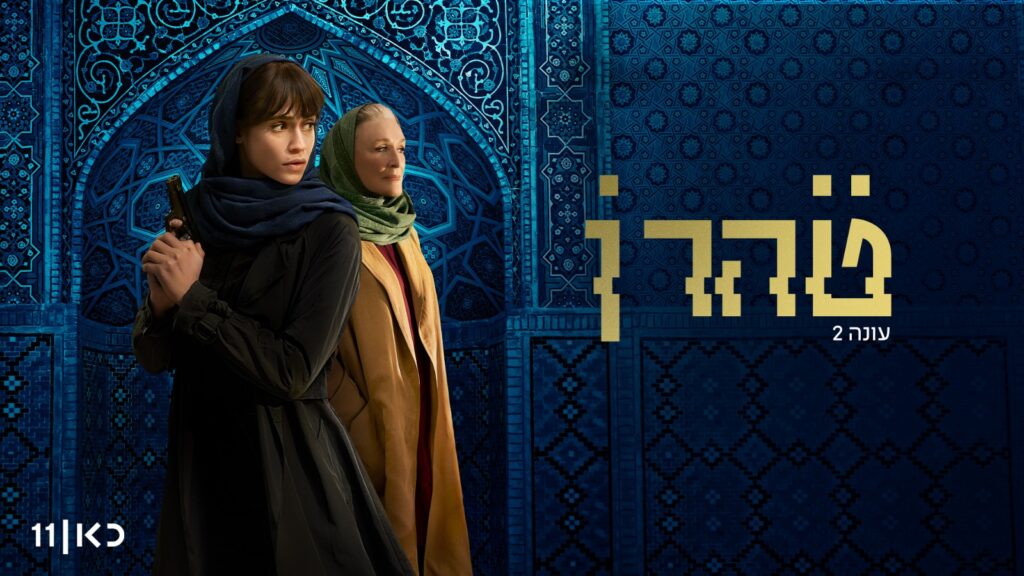
The series Tehran opens on a flight leaving Amman for New Delhi. The plane makes an unexpected landing in Iran; two passengers, a young Israeli couple backpacking through the region, suddenly find themselves in unwanted territory. They are simply tourists who booked a ticket; they have no idea the landing was set up by the Israeli intelligence apparatus Mossad to sneak an agent into Iran.
The couple is pulled off the plane, stripped of their passports, questioned, and repeatedly slapped by officials. The light is dim and the Iranian men emotionless. The tourists, meanwhile, are frightened, every flicker of their terror worth the audience’s attention. In its first few minutes, the show has made clear whose fear we are meant to feel.
Tehran is an Apple TV thriller that won the 2021 International Emmy for Best Drama Series. It is also an Israeli production, created by Moshe Zonder, a writer on the Israeli hit series Fauda. Tehran first aired on Israel’s public broadcaster Kan 11 in 2020 and reached American and global audiences through Apple TV. Its third and final season was delayed after Israel’s twelve-day war on Iran in June 2025; it was then released weekly from January 9 to February 27, 2026, in the narrow window between the first war and the second Israeli-US war that would follow days later.
An earlier generation of Hollywood films built an image of Iran as fanatical, backward, and savage: Not Without My Daughter showed a loving husband curdling into a zealot; 300 cast the ancient Persians as enemies of the West; Argo granted Iranians a grievance before collapsing them into a faceless mob. Together they built a durable picture of a people stripped of ordinary inner life.
More recently, Israeli shows have carried this legacy forward, not only rehearsing the dehumanization of Iranians, but turning Iran into an active war zone in our imaginations. In addition, the lack of any honest Iran on American TVs pushed parts of the diaspora into a fantasy of their own – a golden, pre-1979 Iran scrubbed of its real history – and led Iranian-American actors to give this identity a face.
Jack Shaheen’s documentary film Reel Bad Arabs examined how throughout the 20th century, Hollywood portrayed Middle Easterners through dehumanizing and Orientalist stereotypes. Historically, these stereotypes were also widely deployed against Iran and Iranians.
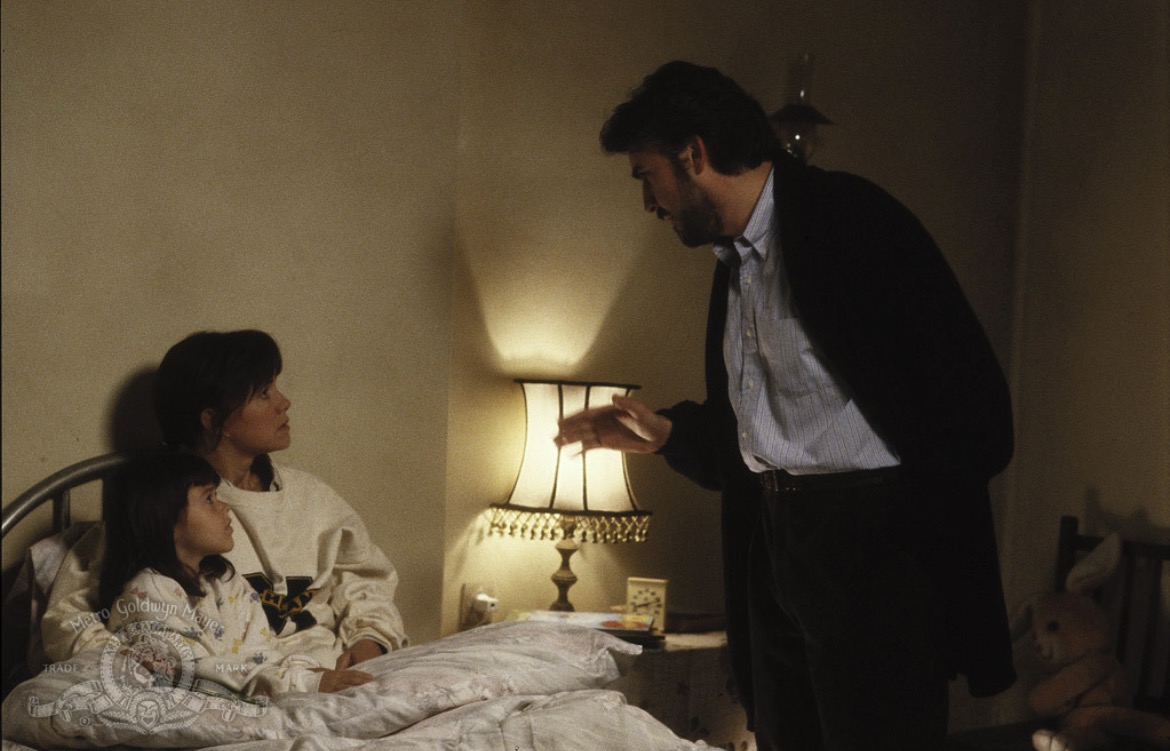
Not Without My Daughter (1991) opened on Sayyed “Moody” Mahmoody (Alfred Molina), the warm, Westernized husband and doctor living comfortably in America, who transforms almost the moment he brings his wife and daughter to visit his religious family in Tehran.
The film’s arrival came after a decade in which the United States had backed Iraq in its war against Iran, right as Iran was reaching toward better relations with Washington. Ironically, the film was shot almost entirely in Israel, with Israeli actors playing many of the Iranians on screen.
Over a decade later, 300 (2006) made the ancient Persians into an army of monsters set against a handful of noble, freedom-loving Spartans who were understood to be standing for the West. Released only a couple of years after George W. Bush labeled Iran part of an “axis of evil,” the film was so over the top that Iran’s delegation to UNESCO formally protested, calling the film a deliberate insult and part of a psychological war against Iran.
Argo (2012) opened by acknowledging the 1953 US and British-backed coup that re-installed the Shah and overthrew Prime Minister Mohammed Mossadegh’s democratically-elected government. But after this moment of clarity, the rest of the film diminished most of the Iranian population into a single screaming crowd gunning for a hostage crisis.
Released as Obama’s sanctions were contracting Iran’s economy, causing medical shortages, and making Tehran’s air unbreathable, the film’s seemingly noble intentions were lost in its all-too familiar dehumanization of Iranians as a whole.

Across these films, among the most popular Hollywood productions on Iran, there is a consistent pattern: Iranians appear as threats, mobs, fanatics, and monsters.
But over the last five years, the tone of dehumanization has shifted. The older productions denied Iranians their full humanity. The new wave of Israeli-made, US-distributed shows go further, turning Iran itself into a war zone to be bombed.
Homeland is the bridge between the two eras. This series ran from 2011 and won a number of Emmys. It was adapted from the Israeli show Prisoners of War, created by Gideon Raff, who also developed the American version.

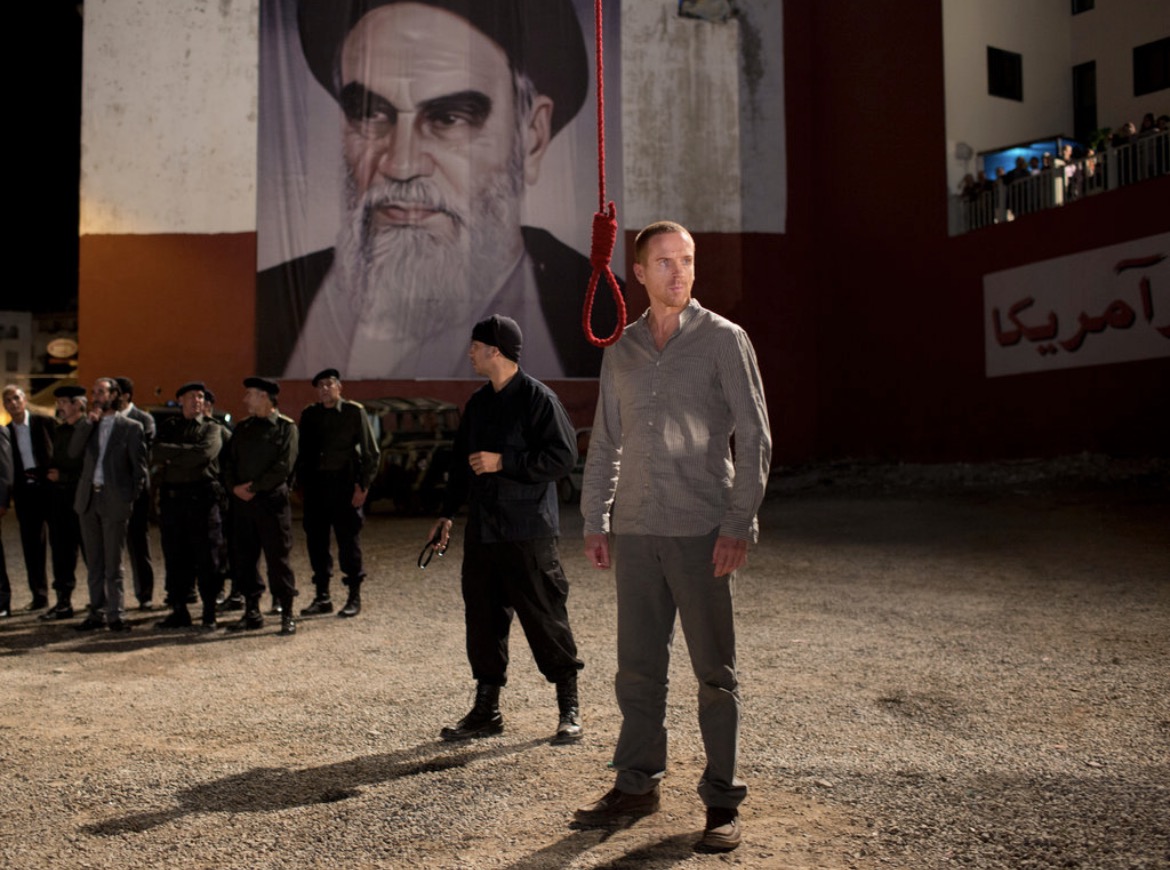
After focusing on other parts of the region, by its third season in 2013, Homeland turned toward Iran. The show sent an American agent, Nicholas Brody (Damian Lewis), into Tehran to kill the head of the Revolutionary Guard so that a US asset inside Iranian Intelligence could take his place. The Iranian security state is portrayed as something the Americans can penetrate and should control from within. Brody kills the commander in his own office; but when he is captured, he is hanged before a crowd in a public square.
Majid Javadi was played by Shaun Toub, the same Iranian-born actor who would later anchor Tehran as the Revolutionary Guard officer Faraz. One diaspora actor, hired to play the Iranian security state for both the American and the Israeli imagination.
Homeland largely ran on the older “Americans good, Iranians bad” logic. Even the Washington Post called it “the most bigoted show on television,” and in 2015 Arab artists hired to decorate a set slipped the phrase “Homeland is racist” into an episode in Arabic, unnoticed until it aired.
While Argo condemned covert US military intervention in Iran, Homeland invited audiences to consider it as a potentially desirable option. The series was released just as Mossad carried out a wave of assassinations on Tehran’s streets. Is it any surprise that Homeland was based on an Israeli production?
Tehran deserves a close look precisely because it does not see itself as propaganda, and would be hurt by the accusation. Accepting its Emmy, executive producer Dana Eden described a show “about understanding the human behind your enemy” and said she hoped Iranians and Israelis might one day meet as friends. This phrasing assumes its own answer. Calling someone ‘the human behind your enemy’ means you have already cast them as a dehumanized enemy.
Israeli television does not emerge at arm’s length from the state it dramatizes: Fauda, the template for this whole genre (and focused on Palestinians), was created by former special-forces soldiers and cast with ex-servicemen, many of whom returned to fight in recent years. These shows also belong to a long Israeli tradition critics call “shooting and crying,” stories that let the soldier grieve his own violence, humanizing the perpetrator while the people on the receiving end barely register. Tehran extends the tradition outward, inviting us to feel the moral weight carried by the Israeli agent while the Iranians she moves among become a backdrop to her conscience.

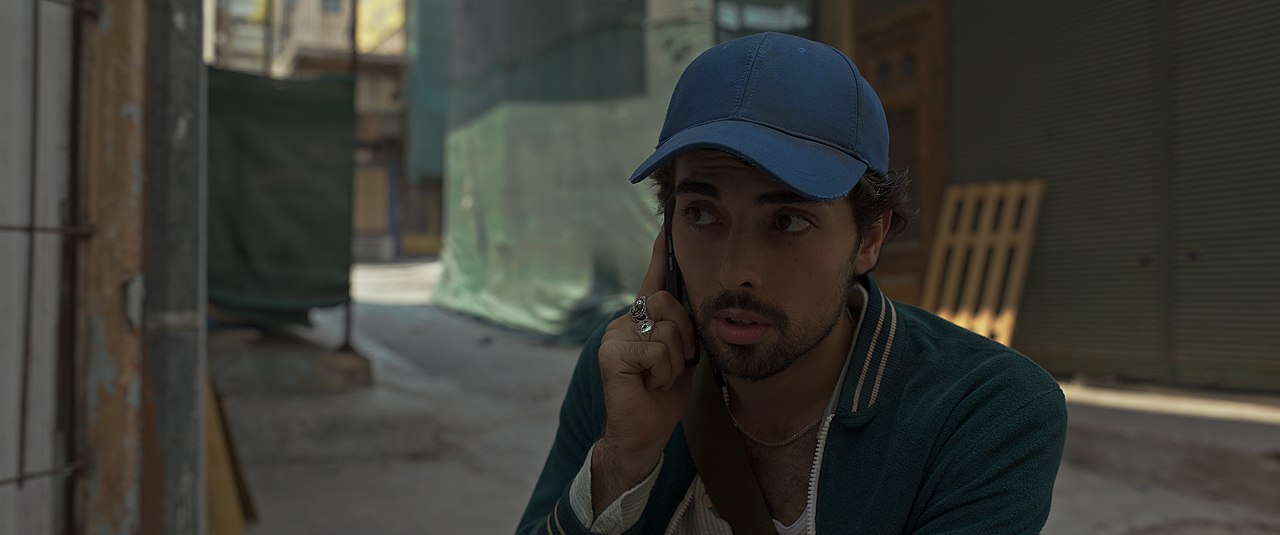
This can be seen in what happens to Iranian men across the three seasons of Tehran. The clearest case is Milad Kahani (Shervin Alenabi), the Iranian hacker and dissident who is introduced as one of the targets of Tamar (Niv Sultan), the show’s Israeli protagonist. He becomes her lover and partner in the mission. The show lets him want things. Season two opens with the promise of escape: Tamar can leave Mossad and flee to Canada with him, and for a stretch the series lets us believe in that ordinary future, two people getting out, building a life away from the regime he despises.
This moment, however, never comes. In the season two finale, as he and Tamar try to slip out of Iran together, Milad is killed by a bomb rigged to their car, caught in the flames while she survives. His death strands Tamar alone in Tehran and sets up her isolation for the next season. The show spent two years making us love Milad before he is suddenly disposed of, serving the survival and the growth of the Israeli lead.
The Israeli characters are given everything the Iranians are denied. When a mission would put one of their own at risk, Mossad calls it off rather than lose a single agent. Israeli lives are precious, counted, and protected one at a time. Tamar herself is written with a real conscience: in the third season she pushes back against a plan to bomb the city, worried about the ordinary Iranians who would die. Her fear and her doubts about the people running her all get screen time. The Israelis are people whose choices weigh on them, while Iranians are the ground they walk on, disposable to the series and storyline.
The institutions are arranged similarly with the same imbalance. Mossad headquarters is a bright, high-tech location full of complex, humane individuals. Iran is shot in dust and harsh fluorescent light: full of security men who bully, interrogators who torture, police who appear incompetent, and a state that teaches its officers that loyalty matters more than family.
When the series reaches for a sympathetic Iranian, it usually picks one who longs for the West, takes off her headscarf, or hates the government, which means it grants them sympathy in exact proportion to how much they agree with the view already aimed at their country from abroad. In doing so, the show also suggests that Iranians opposed to their own government should look for a friend in Israel, which, far from being the genocide-committing, apartheid regime of reality, is instead portrayed as a helping hand for freedom-fighters.
By the third season, fiction has lined itself up with reality. Where the first two seasons ran on personal stakes, spycraft, sabotage, and revenge, the third season reorganizes itself almost entirely around the Iranian nuclear program. The show presents Iran racing in secret toward a bomb, a fiction which not coincidentally has been the central argument of decades of Israeli state demands of the urgent need to attack Iran.
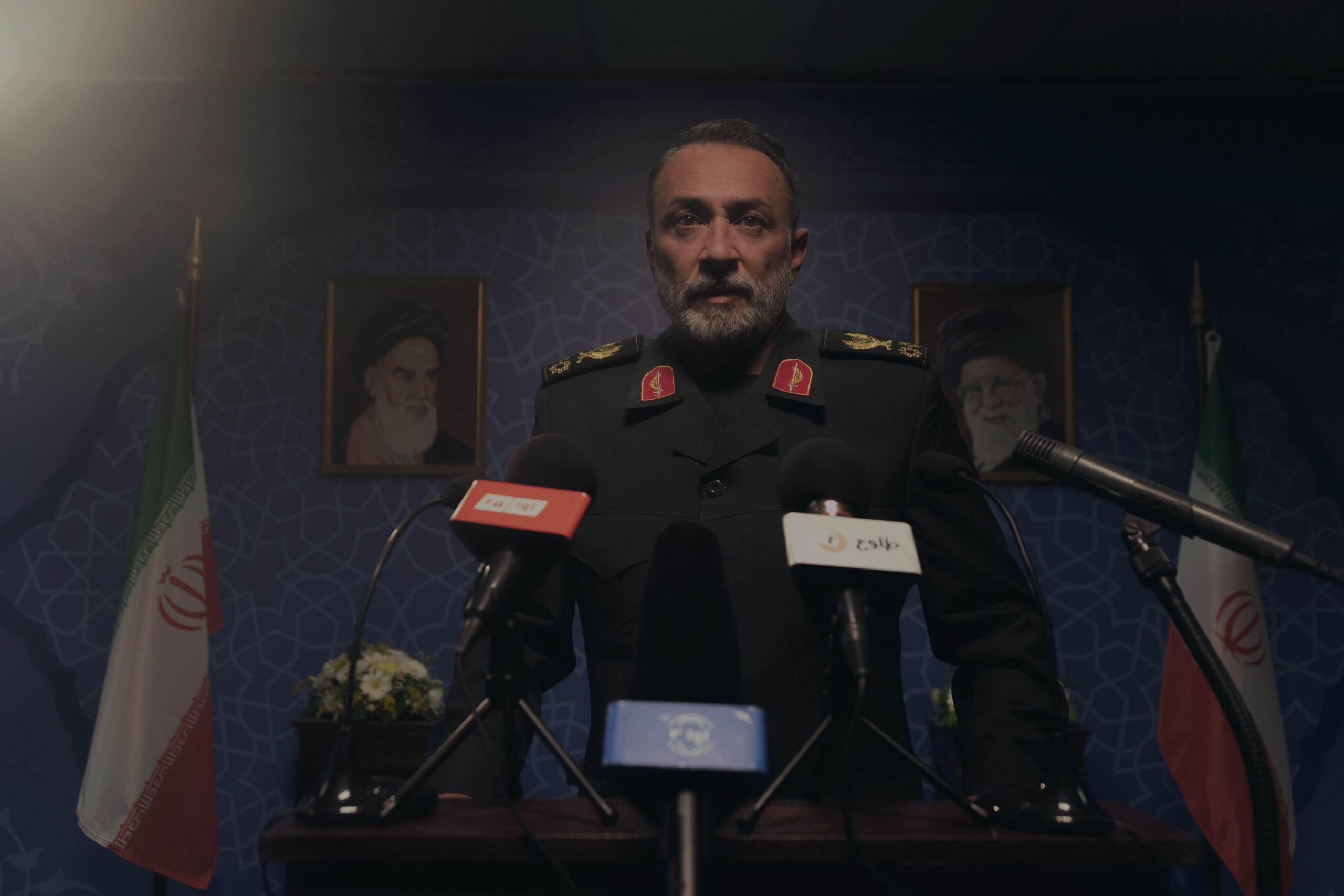
Inspectors move through the inspection halls at Natanz while authorities hide their real capabilities. A warhead is quietly built for an eventual test, and a cleric appears on screen to cite scripture in justification of it (while in reality, Iran’s religious authorities repeatedly declared nuclear bombs impermissible in Islam). The show builds Iran into a full-on nuclear threat, underscoring for the audience that war is not only on the horizon; it is necessary.
What the show never mentions is the actual nuclear arsenal in the region: Israel’s own stockpile is undeclared and closed to inspectors. This sits entirely outside the story.
For many viewers, a show like this is where they learn about Iran. They absorb the sense of the country more vividly through a television series than a news report. By the time the bombs fall, the audience is not only aware of the story because they have watched it on TV; they understand the war on Iran as something natural and justified, because they have already witnessed it unfold and absorbed the (false) justifications.
The eighth and final episode of season three titled “On the Brink of the Abyss,” portrays the destruction of Iran’s nuclear program. The season builds toward an Israeli strike meant to end the threat for good and expose Iran’s concealment to the world, with Israel playing the heroic role saving the world by attacking Iran.
The season finale premiered in the US on February 27, 2026.
The US-Israel war on Iran began on February 28, 2026.

The language throughout the show does quiet work, labeling the Iranian state repeatedly as “The Regime.” While earlier productions painted Iranians as broadly tied to their government, the new wave paints them uniformly in opposition.
Philosopher Omid Mehrgan has a name for where this leads: it ”renders Iran bombardable.” He argues that a steady rhetorical split between the Iranian people and their “regime” lets an attack on the country be sold as sparing the people while punishing only their rulers, since the state reads as “an entity that exists but is wanting in popular legitimacy,” something alien to the population it governs.
Once Iran is imagined as “occupied,” its cities become targets and the blame for their destruction falls on the government, not the foreign powers doing the killing. Tehran performs this split for the audience frame by frame.
The structure around this idea suggests that Iranians need an outside rescuer, rehearsing quite literally the calls for a “rescue mission” that Reza Pahlavi, who is closely aligned with Israel, used to call for the Israeli and US attack on Iran. The audience’s sympathy gets pointed straight at the agent of a state that is bombing the country on screen.
It’s not just fictional Iranians who are positioned as opposed to their government on screen; many of the actors playing them are of Iranian heritage themselves. This includes Navid Negahban, the Iranian-born actor who plays the Mossad-aligned Masoud in Tehran and the terrorist mastermind Abu Nazir in Homeland. Whether consciously or not, many Iranian diaspora actors end up playing roles that implicitly justify war on their country.
In July 2024, Hamas leader Ismail Haniyeh was assassinated in Tehran in an operation widely attributed to Israel. In response, the actress Niv Sultan, who plays the Mossad agent at the center of the series, posted a video of herself sipping coffee and winking at the camera. Israeli and international outlets read the wink as a nod to her character’s line of work.
A real killing in the real Tehran became a promotional occasion for the fictional Mossad agent. Just as a fictional series about attacking Iran paved the way for a real war that has left thousands of Iranians dead.
***
Consent for a war does not emerge the morning the bombs fall. It builds up over years, in the slow piling-up of images that settle ahead of time, the determination of whose death will land as tragedy and whose death will pass as background noise. The fanatic on the poster, the faceless crowd, the Iranian man in Tehran disposed of to power someone else’s storyline: none of these stand apart from the war.
The cruelest work of the image is not the falsehood. It is to make the lie feel like knowledge, so that when the moment comes to look away from what is being done to Iranians, the looking away feels justified, naturalized, normalized.
Before Iranians were killed, they had to become killable. And shows like Homeland and Tehran did precisely that.

Discover more from Ajam Media Collective
Subscribe to get the latest posts sent to your email.


